
As a dog owner, you are too careful about the diet of your furry friend. Right? Do you prefer giving fruits to your dog? Searching for “Can dogs eat papaya?” Concerned about whether or not this treat is safe for your pet? If so, you have come to the right place.
This guide presents a comprehensive discussion on dogs eating papaya. It also elaborates on whether this fruit is safe or not for your dog. In addition, you will learn to prepare papaya for your pet. Moreover, this read presents a list of fruits your dog can eat other than papaya. Let’s get into further details.
Can Dogs Eat Papaya Safely?
Yes, most healthy dogs can eat small amounts of ripe papaya flesh as an occasional treat. However, proper preparation and portion control are crucial. Papaya is rich in nutrients, which can offer a range of benefits to your canine friend.
One thing you must remember is that you must never forget to remove papaya seeds and skin while giving this treat to your pet. Doing this thing can keep your dog away from certain health issues. We will discuss it in detail later in this article.
Also read: Can Dogs Eat Blackberries?
Which Parts of Papaya are Safe for Dogs?
The table shows different forms and parts of papaya you can safely feed to your canine.
| Papaya Part/Form | Safe for Dogs? | What You Should Know? |
| Ripe papaya flesh | Yes, in moderation | Remove the skin and seeds, and then cut the flesh into small pieces. |
| Papaya seeds | Best avoided | They can be difficult to digest and may cause GI problems, particularly in larger quantities. |
| Papaya skin | Best avoided | It can be difficult to digest and may upset the dog’s stomach. |
| Unripe papaya | Best avoided | Choose ripe papaya flesh rather than unripe fruit. |
| Plain frozen papaya | Yes, with precautions | Use small pieces of appropriately sized papaya that are easy for your dog to manage. |
| Unsweetened dried papaya | In small amounts, with caution | Drying concentrates sugars and calories, so fresh papaya is generally preferable. |
| Canned papaya | Depends on ingredients | Check the label for added sugar, syrup, xylitol, and other unsuitable ingredients. |
| Papaya mixed with plain yogurt | Sometimes | Use plain, unsweetened yogurt only if your dog tolerates dairy. Never use a product containing xylitol. |
Is Papaya Healthy for Dogs?
Yes, papaya can be a good occasional treat for your dog. Below are the positives associated with this fruit.
- Rich in Fiber: Papaya provides dietary fiber, which can support normal bowel function. However, too much papaya may cause loose stools, diarrhea, or other digestive upset. Feed it in small amounts as an occasional treat rather than using it to prevent or treat digestive problems.
- A Good Source of Nutrients: Papaya contains vitamins (such as vitamins A and C), dietary fiber, and potassium. Small servings can contribute to a dog’s overall nutrient intake, but papaya is not a substitute for a complete and balanced canine diet. Dogs eating an appropriate, nutritionally complete food generally don’t need fruit to meet their basic nutritional requirements.
- A Natural Papain Source: The papain enzyme breaks down proteins into smaller peptides and amino acids. All papayas contain this enzyme. Moderate amounts of fresh papaya can support your dog’s digestive health.
How to Prepare Papaya for Your Dog?
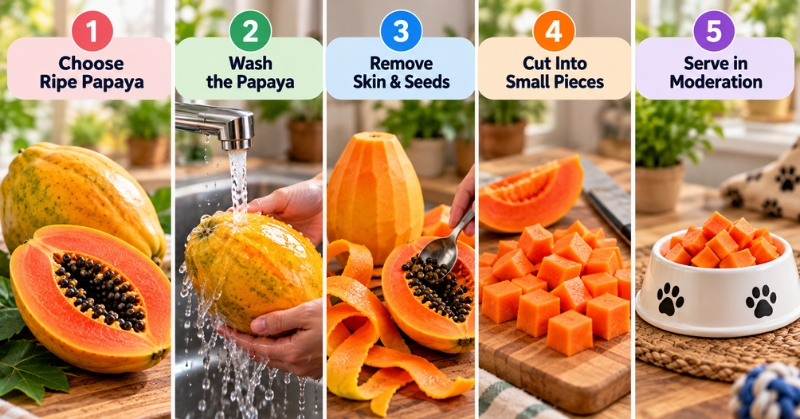
You can get the papaya ready for your pet in 5 simple steps.
Step 1: Choose the Ripe Papaya
Pick a slightly soft papaya with orange or yellow skin that is not overly mushy. Avoid feeding an unripe papaya to your dog, as it contains more latex, which can irritate the mouth and stomach.
Step 2: Wash the Papaya
Don’t forget to gently wash the whole papaya before giving it to your canine. Washing helps remove the dust or dirt from the fruit, but it does not remove all the pesticide residues. Therefore, always peel the fruit before serving.
Step 3: Remove the Skin & Seeds
The skin can be very difficult to digest for your pet. Therefore, peel it off completely. Similarly, remove all the seeds, as they can pose a choking hazard and cause digestive upset or intestinal blockage.
Step 4: Cut Slices
Now, cut papaya into small pieces or turn it into bite-sized cubes. You can also mash it for easy digestion. Try considering any of the options, considering the size of your dog.
Step 5: Serve
Giving this fruit to your dog in moderation is key. As stated earlier, papaya is rich in fiber, so feeding your pet a large amount of this fruit may lead to an upset stomach.
Also read: How to Prepare Apricots for Dogs?
What to Do If My Dog Accidentally Eats Papaya Seeds or Skin?
If your dog accidentally eats papaya seeds or skin, the risk depends on the amount swallowed and your dog’s size. Remove any remaining papaya and contact your vet for advice if your dog has eaten a substantial quantity or you are concerned.
Watch for vomiting, abdominal discomfort, reduced appetite, or lethargy. Seek urgent vet guidance if these signs develop, and do not induce vomiting unless a veterinarian instructs you to do so.
Read more: What to Do If Your Dog Eats Large Amounts of Acai?
Fun Ways to Feed Papaya to Your Dog
Now that you are familiar with preparing papaya for your canine, it is time to serve it in different ways, as listed below.
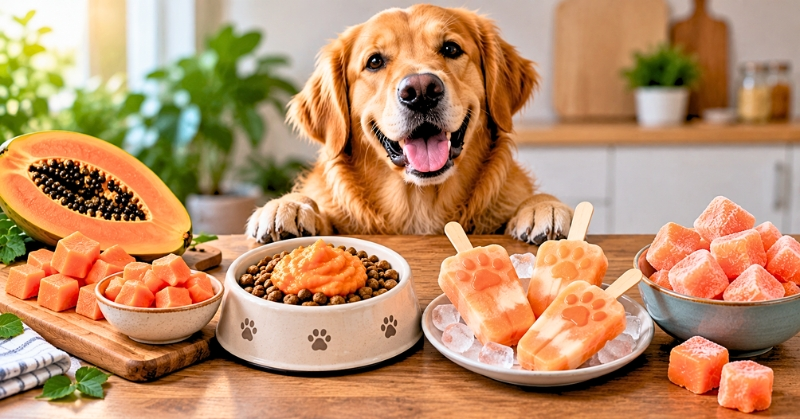
- Plain Papaya: Serve bite-sized, fresh pieces of papaya to your pet.
- Papaya Puree: Mix plain, mashed papaya (without seasonings or added sugar) into the dog’s food to give it a whole new look.
- Homemade Dog Popsicles: Blend a small amount of plain, unsweetened yogurt (if tolerated) with papaya. Then, freeze it in molds.
- Frozen Papaya: Freeze papaya chunks and serve appropriately sized pieces as refreshing snacks. Don’t assume hard frozen chunks suit every dog.
How Much Papaya Is Safe for My Dog?
Start with one or two small pieces of peeled, ripe papaya and see how your dog responds. The appropriate portion depends on your dog’s size, overall calorie needs, health, and tolerance. Remember, the amounts below are general starting points for healthy adult dogs, not guaranteed safe limits.
Keep all treats combined (including papaya) within 10% of your dog’s daily calorie intake, and ask your veterinarian for individualized advice if your dog has a medical condition or follows a prescription diet.
- Extra Small: The dogs under 20 lbs are known as extra small. You can give one or two small pieces of papaya to these dogs. Alternatively, you can feed them less than a tablespoon of papaya. Examples of these pups include Chihuahuas, Pugs, Yorkshire Terriers, and Pomeranians.
- Small: Dogs weighing between 21 and 30 lbs are called small ones. Three to four small pieces of papaya are enough for them. It is equivalent to one tablespoon. Examples include Beagles, and Boston Terriers.
- Medium: If your dog weighs between 31 and 50 lbs, it is a medium dog, and you can serve it five to six small pieces of papaya. This dosage is equivalent to 1 to 2 tablespoons. Border Collies and Basset Hounds are popular examples of medium-sized dogs.
- Large: If the dog’s weight is between 51 and 90 lbs, 2 tablespoons or seven to eight small pieces of papaya are good to go. Top examples include Australian Shepherds, Pit Bulls, and Labrador Retrievers.
- Extra Large: Dogs with 91+ lbs of weight are considered among the extra-large canines. You can give them around 10 small pieces of papaya. Alternatively, you can feed no more than a 1/4th a cup. Great Pyrenees, Newfoundlands, and St. Bernards are common examples of extra-large dogs.
Curious how old your dog is in human years? Try our Dog Age Calculator to estimate your dog’s equivalent human age and decide how much you can feed your dog based on the size.
Learn more: How Much Applesauce Can Dogs Eat?
Can Puppies Eat Papaya?
Puppies may be able to eat a small amount of plain, ripe papaya, but it should not replace a complete and balanced puppy food.
If your vet confirms that it is appropriate, remove the skin and seeds, cut the flesh into very small pieces, and introduce it gradually.
Puppies have specific nutritional needs and can be more vulnerable to choking, so avoid large pieces and stop feeding papaya if digestive upset occurs.
If your dog is expecting puppies, use PawQuery’s Dog Pregnancy Calculator to estimate her due date based on her mating date. Try our Dog Name Generator to discover name ideas that suit your new companion.
Explore: Can Puppies Eat Banana Chips?
Can Dogs with Diabetes or Pancreatitis Eat Papaya?
If your dog has diabetes, pancreatitis, a chronic gastrointestinal condition, or a prescribed therapeutic diet, ask your veterinarian before offering papaya. Your dog’s nutritional requirements and treatment plan should determine whether this fruit is appropriate.
Can Papaya Be Allergic to My Dog?
Most healthy dogs can tolerate small amounts of ripe papaya, but an adverse reaction is possible. Watch for possible signs (as listed below) after introducing the fruit. These symptoms do not automatically confirm a food allergy, as digestive intolerance and other conditions can cause similar signs. Stop feeding papaya and contact your veterinarian if symptoms develop.
- Watery eyes
- Sneezing
- Facial swelling
- Vomiting or diarrhea
- Rashes or redness
- Excessive scratching
- Itchy skin, redness
If your dog develops difficulty breathing, sudden facial or throat swelling, collapse, or other signs of a severe reaction, seek emergency vet care. Repeated vomiting, marked weakness, or rapidly worsening symptoms also need urgent vet assessment. Don’t wait for symptoms to persist or worsen before seeking emergency help.
Read more: How to Feed Longans to Dogs?
What to Do If Your Dog Is Allergic to Papaya?
Take these four steps instantly.
- Stop giving papaya to your canine immediately.
- Monitor symptoms closely and contact your vet if your dog develops diarrhea, vomiting, redness, itching, or other unusual symptoms.
- Give fresh drinking water to your furry friend, but don’t rely on it to treat an allergic reaction.
- If the symptoms persist or worsen, seek emergency veterinary care.
Important Note: Do not give human allergy medicines to your dog or attempt home treatments unless your vet instructs you to do so.
Prevent Allergic Reactions Instantly
- Always start with giving a small amount of papaya and monitor your dog after feeding the fruit.
- Feed ripe, fresh papaya. Don’t forget to remove the skin and seeds.
- Stop giving the fruit if a reaction occurs.
What Other Fruits Can I Give My Dog?
There is a long list of fruits, including papaya, that you can safely feed in moderation. Let’s look at a few common fruits you can give your pet without any worry.
- Watermelon: It is a refreshing and hydrating dog treat. Don’t forget to remove rind and seeds before giving it to your canine.
- Mango: It is rich in vitamin A, vitamin C, and vitamin E. Remove skin and pit before feeding.
- Apple: It is a great source of vitamin C and fiber. Remember to remove the core and seeds.
- Bananas: This tasty fruit is rich in fiber and potassium.
- Pineapple: It offers digestive enzymes. You can feed pineapple in small amounts to your dog as an occasional treat.
Read more: What Human Foods Can Dogs Eat?
Final Words
Wondering whether dogs can eat papaya safely? The answer is YES for most healthy dogs, but only ripe, peeled, and deseeded papaya should be served in small amounts. Don’t forget to remove the skin and seeds before feeding.
Introduce papaya gradually, watch for digestive upset or other unusual symptoms, and consult your vet if your dog has a medical condition or develops a concerning reaction.
Other fruits, including apples, bananas, mangoes, and watermelon, may also be suitable treats when prepared appropriately and fed in moderation.
What Dog Owners Often Ask?
No, you can’t give papaya seeds to your dogs, as they contain trace amounts of cyanide. Accidentally swallowing one or two papaya seeds may not be too risky, but larger quantities may cause severe health issues (if swallowed), such as digestive problems, choking hazard, and intestinal blockage (especially in smaller dogs).
It is not good to feed your dog papaya skin. Though the skin is not toxic, it can be difficult for your canine to digest it and may lead to issues like intestinal blockage and an upset stomach.
Generally, you should avoid feeding canned and dried papaya to your dog. Canned papaya may contain syrups, added sugars, xylitol, or other preservatives that are potentially unsafe for dogs. Always check the product ingredients before feeding. On the other hand, if you want to give dried papaya to your dog, make sure it is unsweetened and plain. Plus, feed very small amounts as a rare treat.
If your dog eats too much papaya or develops repeated vomiting, abdominal discomfort, or marked lethargy, contact your vet immediately. Eating large amounts of papaya can cause different health risks in dogs, such as vomiting, diarrhea, loose stools, and stomach upset.