
Every dog owner has experienced those shiny puppy eyes while enjoying a slice of cake, a cookie, or a scoop of ice cream. Naturally, many pet parents wonder what sweet things can dogs eat without putting their furry companion’s health at risk.
The good news is that dogs can safely enjoy certain naturally sweet foods and specially prepared dog-friendly desserts. However, many traditional human sweets contain ingredients that are dangerous (or even toxic) to dogs, including chocolate, xylitol, raisins, excessive sugar, and artificial sweeteners.
This guide explains:
- What sweet treats can dogs eat?
- Which human foods can dogs occasionally eat?
- What desserts can dogs eat safely?
- Which sweets should never be shared with your dog?
Whether you are celebrating your dog’s birthday or simply looking for healthier treats, this guide will help you make informed choices.
Can Dogs Eat Sweets?
The simple answer is “Yes, dogs can eat sweets, but only certain kinds.” Dogs don’t require sugary foods in their diet. Their nutritional needs are met through complete, balanced dog food rich in protein, healthy fats, vitamins, and minerals.
However, dogs can enjoy naturally sweet foods in moderation, especially those containing beneficial nutrients such as fiber, antioxidants, and vitamins. Examples include apples, blueberries, strawberries, bananas, pumpkin, and plain yogurt.
These foods satisfy your dog’s curiosity for sweet flavors without exposing them to harmful ingredients commonly found in processed desserts.
Why Do Dogs Like Sweet Things?
Although dogs have fewer taste buds than humans, they can still detect sweetness. Scientists believe dogs evolved this ability because fruits and some plant foods provided valuable nutrients in the wild.
Many dogs also associate sweet treats with positive experiences like training, celebrations, or family gatherings.
Should Dogs Eat Sweets?
In general, sweets should remain occasional treats, not daily snacks. Too much sugar in sweets can contribute to various health issues, including weight gain, dental disease, diabetes risk, digestive upset, and pancreatitis in susceptible dogs.
Vets generally recommend limiting treats (including sweet treats) to no more than 10% of your dog’s daily calorie intake.
What Sweet Things Can Dogs Eat?
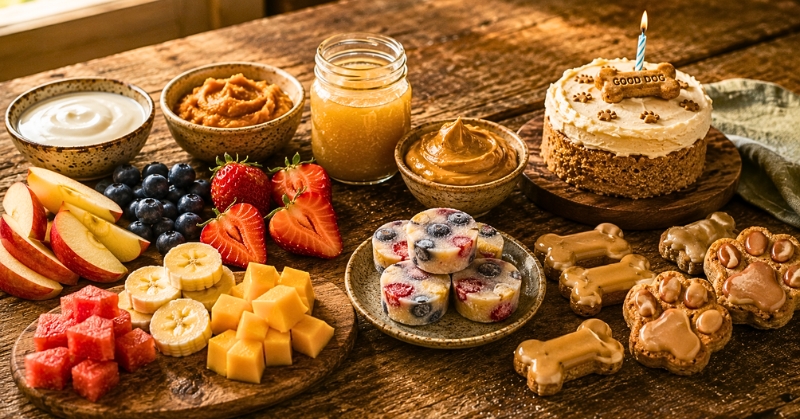
If you are wondering what kind of sweets can dogs eat, choose naturally sweet foods or dog-specific desserts instead of processed human candy. Below are a few sweets dogs can safely eat in moderation.
Fresh Fruits
Many fruits provide natural sweetness along with fiber and vitamins. Safe options include:
- Apples (without seeds): Apples are rich in fiber and vitamin C, helping support healthy digestion and the immune system in dogs.
- Blueberries: Blueberries are packed with antioxidants that help protect your dog’s cells from damage and support brain and heart health.
- Strawberries: Strawberries provide vitamin C, fiber, and antioxidants that promote immune function and overall well-being.
- Bananas: Bananas are a good source of potassium, vitamin B6, and fiber, making them a healthy occasional treat that supports muscle and digestive health.
- Watermelon (seedless): Seedless watermelon is high in water and vitamins A and C, which help keep dogs hydrated while providing essential nutrients.
- Mango (without pit): Mango contains vitamins A, C, and E along with fiber, which support healthy skin, vision, and digestion in dogs.
- Pears (without seeds): Pears are a nutritious source of fiber, vitamin C, and copper, which help support digestive and immune health in dogs.
Serve small bite-sized portions appropriate for your dog’s size.
Plain Yogurt
Plain, unsweetened yogurt contains probiotics that may support digestive health in many dogs. Avoid feeding your dog flavored yogurt (such as strawberry yogurt and Yoplait yogurt), sweetened yogurt, or yogurt containing xylitol. Frozen plain yogurt also makes an excellent summer treat.
Pumpkin Puree
Plain pumpkin puree is rich in fiber. It helps support healthy digestion and can help manage both mild constipation and diarrhea in dogs. Pumpkin puree also provides vitamins A, C, and E, along with potassium, which makes it a nutritious, low-calorie treat when served in moderation. Avoid pumpkin pie filling because it contains added sugar and spices.
Unsweetened Applesauce
Unsweetened applesauce can be offered occasionally in small amounts. It is easy to digest and provides vitamin C, fiber, and antioxidants that support your dog’s overall health. Unsweetened applesauce also makes a soft, low-fat treat for dogs, as long as it contains no added sugar, artificial sweeteners, xylitol, cinnamon sugar, or spices.
Peanut Butter (Xylitol-Free)
Many dogs love peanut butter because of its rich taste. Xylitol-free peanut butter is a good source of healthy fats, protein, and vitamin E, which makes it a tasty and nutritious treat for dogs in moderation. Always check the ingredient label to ensure it contains no xylitol, as this artificial sweetener is highly toxic and potentially fatal to dogs.
Homemade Frozen Dog Treats
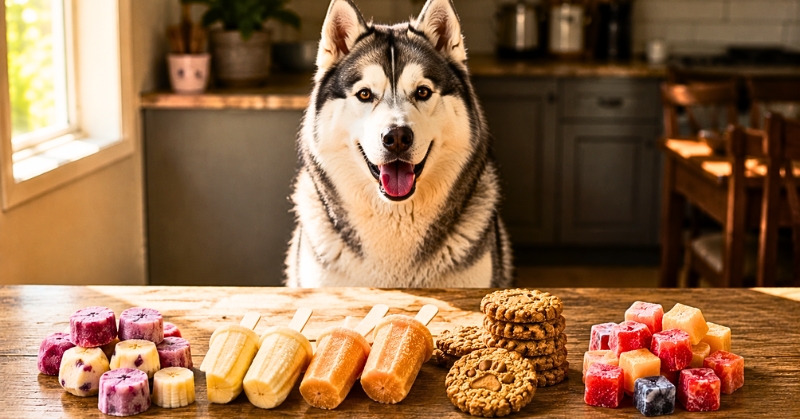
One of the safest sweet treats for dogs is homemade frozen treats. Homemade frozen dog treats made with dog-safe ingredients like plain yogurt, pumpkin puree, or safe fruits can provide a refreshing, nutritious snack, especially in warm weather. They allow you to control the ingredients, so they are free from harmful additives, excess sugar, and artificial sweeteners that may be found in commercial frozen desserts.
Dog-Friendly Birthday Cakes
Many owners ask what cake can dogs eat. Dogs should only eat cakes specifically made for dogs. Dog birthday cakes often use ingredients like oat flour, whole wheat flour, pumpkin, banana, peanut butter, and Greek yogurt frosting.
These cakes provide a fun, occasional treat for celebrations while reducing the risk of harmful ingredients found in regular human cakes, but they should still be served in small portions as part of a balanced diet. Avoid feeding your dog regular birthday cakes made for humans.
Commercial Dog Bakery Treats
Dog bakeries create treats specifically formulated for canine digestion. Many of them offer cookies, cupcakes, donuts, birthday cakes, and seasonal treats. These products generally avoid harmful ingredients like chocolate and xylitol while using dog-safe recipes.
What Human Sweet Treats Can Dogs Eat?
Many dog owners wonder what human sweets can dogs eat. The table below shows a quick guide.
| Human Treat | Safe? | Notes |
| Fresh fruit | Yes | Best natural option |
| Plain yogurt | Yes | Unsweetened only |
| Applesauce | Yes | Unsweetened |
| Pumpkin puree | Yes | 100% pumpkin |
| Homemade frozen yogurt | Yes | Great in moderation |
| Peanut butter | Yes | Must be xylitol-free |
| Vanilla ice cream | Occasionally | Small amount only; lactose and sugar may upset the stomach |
| Cake | Occasionally | Only dog-friendly recipes in very small amounts |
| Cookies | No | Too much sugar and butter |
| Chocolate | No | Toxic |
| Candy | No | Dangerous ingredients |
| Marshmallows | No | High sugar; some contain xylitol |
Even when a food is technically safe, moderation remains essential.
What Desserts Can Dogs Eat?
If you are wondering what desserts can dogs eat, the safest choices are homemade or commercially prepared desserts designed specifically for dogs. Popular options are listed in the table below.
| Dog-Friendly Dessert | Safe for Dogs? | Key Benefits | Note | Serving Frequency |
| Frozen Yogurt Bites | Yes | Rich in probiotics, calcium, and nutrients | Use only plain yogurt. Never use flavored yogurt, added sugar, or xylitol. | Occasional treat |
| Banana & Pumpkin Popsicles | Yes | High in fiber, vitamins A, C, B6, and potassium | Avoid pumpkin pie filling, added sugar, chocolate, and artificial sweeteners. | Occasional treat |
| Peanut Butter Oat Cookies | Yes | Good source of protein, healthy fats, fiber, and vitamin E | Peanut butter must be xylitol-free. Avoid chocolate chips, raisins, sugar, and artificial sweeteners. | Occasional treat |
| Frozen Fruit Cubes | Yes | Hydrating, antioxidant-rich, and low in calories | Never include grapes, raisins, apple seeds, or sweetened yogurt. | Occasional treat |
Let’s look at the above dog-friendly desserts one by one.
Frozen Yogurt Bites
Frozen yogurt bites are typically made by mixing plain, unsweetened yogurt with dog-safe ingredients such as pumpkin puree, mashed banana, blueberries, or xylitol-free peanut butter, then spooning the mixture into silicone molds or ice cube trays and freezing until firm.
They are safe for dogs because they contain no added sugar, artificial sweeteners, chocolate, grapes, or other toxic ingredients, and they should be served in moderation as an occasional treat.
Banana and Pumpkin Popsicles
Banana and pumpkin popsicles are made by blending ripe bananas with plain, unsweetened pumpkin puree and, if desired, a small amount of plain yogurt or water until smooth.
The mixture is poured into silicone molds or ice cube trays and frozen until solid, which creates a refreshing treat made only with dog-safe ingredients and free from added sugar, artificial sweeteners, chocolate, or other harmful foods.
Peanut Butter Oat Cookies
Peanut butter oat cookies for dogs are typically prepared by combining xylitol-free natural peanut butter, rolled oat flour (or finely ground oats), and ingredients like mashed banana, pumpkin puree, or an egg to form a simple dough.
The dough is shaped into small cookies and baked until firm, which creates a wholesome treat without added sugar, chocolate, raisins, or artificial sweeteners that could be harmful to dogs.
Frozen Fruit Cubes
Freeze blueberries, strawberries, or watermelon pieces into ice cubes for refreshing summer snacks. Frozen fruit cubes are prepared by blending or finely chopping dog-safe fruits such as blueberries, strawberries, bananas, seedless watermelon, or peeled apples (without seeds), then mixing them with water or plain, unsweetened yogurt if desired.
The mixture is poured into ice cube trays or silicone molds and frozen until solid, creating a refreshing treat that contains no added sugar, artificial sweeteners, grapes, raisins, or other ingredients that are toxic to dogs.
Sweets Dogs Should Never Eat
Some sweets can cause severe illness or become life-threatening.
| Food | Why It Is Dangerous? |
| Chocolate | Contains theobromine and caffeine |
| Candy | High sugar; may contain xylitol |
| Sugar-free gum | Often contains xylitol |
| Sugar-free desserts | Xylitol poisoning risk |
| Raisin desserts | Raisins can cause kidney failure |
| Cheesecake | High fat and sugar |
| Brownies | Chocolate toxicity |
| Donuts | Fat, sugar, and additives |
| Churros | Fried, sugary, and unhealthy |
| Sweet tarts | Artificial ingredients and excessive sugar |
| Marshmallows | Sugar and possible xylitol |
| Sweet tea | Contains caffeine and excessive sugar |
Even small amounts of certain ingredients can require immediate vet care.
What Sweeteners Are Bad for Dogs?
Not all sweeteners are created equal.
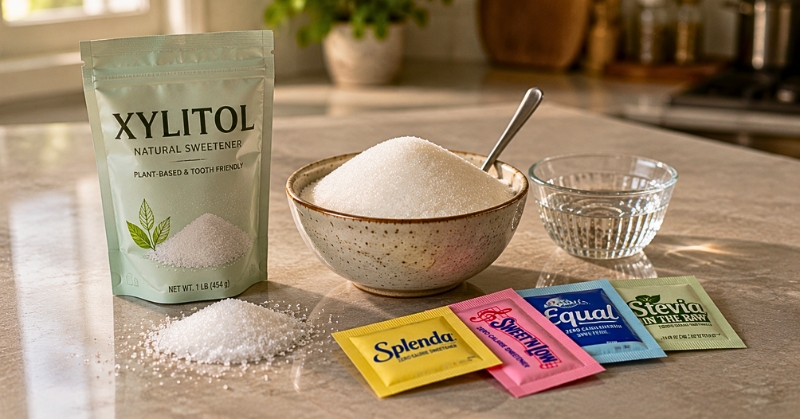
Xylitol
Xylitol is the most dangerous sweetener for dogs. It is a sugar alcohol used as a sweetener in many sugar-free and “no added sugar” products. It is commonly found in:
- Sugar-free chewing gum and mints
- Sugar-free peanut butter and other nut butters
- Sugar-free candies and chocolates
- Baked goods and desserts labeled “sugar-free”
- Toothpaste and mouthwash
- Cough syrups, chewable vitamins, and some medications
- Protein bars and low-carb snacks
Xylitol is extremely toxic to dogs because it causes a rapid release of insulin, which leads to a sudden and dangerous drop in blood sugar. Even a small amount can cause weakness, vomiting, loss of coordination, tremors, seizures, collapse, and, in severe cases, liver failure or death. Symptoms can develop within an hour after ingestion, which makes xylitol poisoning a medical emergency that requires immediate veterinary care.
High Sugar
A diet high in sugar is unhealthy for dogs because their bodies are not designed to process large amounts of added sugars. Regularly eating sugary foods can contribute to weight gain, obesity, dental disease, and blood sugar imbalances, which increases the risk of long-term health problems.
Excess sugar can also upset a dog’s digestive system. It leads to vomiting, diarrhea, or stomach discomfort. Over time, frequent consumption of sugary treats may increase the risk of conditions such as diabetes and pancreatitis, so sweets should be limited and replaced with healthier, dog-safe treats whenever possible.
Artificial Sweeteners
Artificial sweeteners are not a healthy choice for dogs because many offer no nutritional benefit, and some can cause digestive upset, including gas, bloating, diarrhea, or stomach discomfort. Foods containing artificial sweeteners are also often highly processed and may contain other ingredients that are unsuitable for dogs.
One artificial sweetener, xylitol, is especially dangerous because it is highly toxic to dogs. Even a small amount can cause a rapid drop in blood sugar, seizures, liver failure, and death (in severe cases). For this reason, dogs should never be given foods or treats that contain xylitol or other products marketed as sugar-free without first checking the ingredient label.
Signs Your Dog Ate Too Many Sweets
If your dog consumed sugary foods, watch for signs:
- Vomiting
- Diarrhea
- Lethargy
- Excessive thirst
- Stomach pain
- Loss of appetite
- Restlessness
If chocolate or xylitol is added to the food items, symptoms may include:
- Tremors
- Seizures
- Weakness
- Collapse
Monitor your dog closely after any accidental ingestion of sweets. If symptoms worsen, persist, or you know the food contained a toxic ingredient, contact your veterinarian or an emergency animal clinic immediately. Prompt treatment can make a significant difference in your dog’s recovery.
What To Do If Your Dog Eats Unsafe Sweets?
If your dog eats unsafe sweets, stay calm and determine:
- What your dog ate?
- How much?
- When it happened?
- Your dog’s weight?
Then, follow the steps below.
- Remove remaining sweets.
- Read the ingredient label.
- Contact your vet immediately.
- Call an animal poison hotline if recommended.
- Do not induce vomiting unless instructed by a vet professional.
Quick action greatly improves the outcome in poisoning cases.
What Dog Owners Often Ask?
Dogs can safely enjoy naturally sweet foods like apples (without seeds), bananas, blueberries, strawberries, watermelon, plain unsweetened yogurt, pumpkin puree, and homemade dog-friendly treats made without added sugar or harmful ingredients. These food items should always be served in moderation as occasional treats.
Dogs can occasionally eat a few human sweet foods that are naturally safe, such as fresh fruit, plain yogurt, unsweetened applesauce, pumpkin puree, and xylitol-free peanut butter. Avoid processed desserts, candies, and baked goods made for humans, as they often contain too much sugar or toxic ingredients.
Chocolate, sugar-free candy containing xylitol, raisins, grapes, brownies, chocolate cakes, cookies, candies, and many processed desserts are poisonous or dangerous for dogs. If your dog accidentally eats any of these foods, contact your vet immediately, especially if the product contains chocolate or xylitol.
No. Puppies should avoid sugary treats because their digestive systems are still developing. If you want to reward a puppy, choose vet-approved puppy treats or small portions of dog-safe fruits instead.
Yes, homemade dog desserts can be a healthier choice because you control the ingredients and can avoid added sugar, artificial sweeteners, and preservatives. Use only dog-safe ingredients and serve them in moderation.
Yes, dogs can taste sweet flavors and often enjoy naturally sweet foods like fruits. However, they do not need sugary treats, and sweets should only be offered in the form of healthy, dog-safe ingredients.
It is best not to give marshmallows to dogs. While regular marshmallows are not usually toxic, they are high in sugar and offer no nutritional value. Sugar-free marshmallows may contain xylitol, which is extremely toxic to dogs.
No, churros are not suitable for dogs because they are high in sugar and fat and are often made with ingredients that can upset a dog’s stomach. They should be avoided as a treat.
No, sweet tea contains caffeine (which is toxic to dogs) along with excessive sugar that can contribute to obesity and other health problems. Fresh, clean water is always the safest drink for dogs.
Final Words
Choosing the right treats for your dog doesn’t mean eliminating sweetness altogether. It means making smarter, healthier choices. If you have been wondering what sweet things can dogs eat or what desserts can dogs eat, the safest options are naturally sweet fruits, plain yogurt, pumpkin, homemade frozen treats, and desserts specially made for dogs.
At the same time, it is essential to keep harmful foods like chocolate, xylitol, raisins, sugary candies, and heavily processed desserts far out of your dog’s reach. A few informed decisions today can help protect your furry friend from unnecessary health risks tomorrow.
Every treat you offer is an opportunity to support your dog’s health, happiness, and long-term well-being. Before sharing any sweet food, take a moment to check the ingredients, serve only pet-safe options in moderation, and consult your vet if you are ever unsure.
By putting your dog’s safety first, you can still celebrate birthdays, holidays, and everyday moments with delicious, dog-friendly treats while creating happy memories without compromising your furry friend’s health.