

As a dog owner, you have probably experienced that familiar moment: you are snacking on fresh fruit, and your furry friend is sitting nearby, eyes locked on you, tail wagging, silently asking for a bite. If blackberries are on your plate, one question naturally comes to mind: Can dogs eat blackberries safely?
The short answer is YES, dogs can eat blackberries, but only when they are fed the right way, in the right amount, and with a few essential precautions in mind.
This guide is designed to remove all the confusion around feeding blackberries to dogs. We will explore safety concerns, proper serving sizes, nutritional benefits, possible risks, and the safest ways to prepare blackberries for your dog.
Whether you are wondering “Can my dog eat blackberries?” or comparing fruits like blueberries, raspberries, and strawberries, this article will help you make informed and confident decisions.
Can Dogs Eat Blackberries?
Yes, dogs can eat fresh blackberries, and for most dogs, they are generally safe when fed in moderation. Blackberries contain tiny amounts of naturally occurring xylitol (which is toxic to dogs), but normal treat-sized portions are not expected to cause xylitol poisoning.
Blackberries should be treated as an occasional treat, not a daily snack or meal replacement. Dogs’ digestive systems are very different from ours, and too much fruit — even healthy fruit — can cause stomach upset.
So if you are asking:
- Can a dog eat blackberries? The answer is Yes.
- Can dogs eat blackberries raw? The answer is Yes.
- Can dogs eat blackberries every day? It is not recommended
Moderation and preparation matter just as much as the fruit itself.Merck Veterinary Manual does not specifically list blackberries as a toxic food for dogs. Its general nutrition guidance emphasizes feeding dogs a complete and balanced diet and treating additional foods as supplemental rather than nutritionally essential.
Read more: Can Dogs Eat Guava? The Secret Fruit!
Why Dog Owners Worry About Feeding Blackberries?
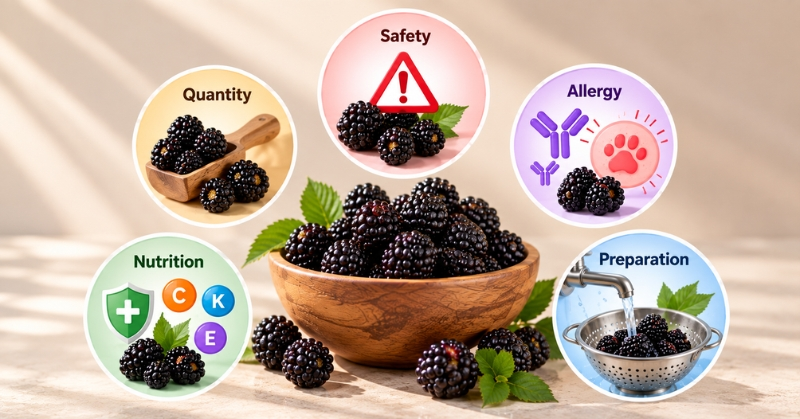
Many dog owners hesitate before giving fruit to their pets, and that’s a good thing. Some fruits are toxic to dogs, while others are safe only in small quantities. Here are the most common concerns dog owners have about blackberries:
- Safety Concerns: People worry that blackberries might be toxic or harmful, especially because they contain seeds and natural sugars.
- Right Quantity: “How many blackberries can a dog eat?” is one of the most searched questions. Too many can cause diarrhea or bloating.
- Allergic Reactions: Even safe foods can cause allergic reactions in some dogs.
- Nutritional Value: Are blackberries actually good for dogs, or are they just empty calories?
- Preparation Confusion: Should blackberries be washed, mashed, frozen, or cut? Can dogs eat them whole?
We will cover each of these in detail so you don’t have to guess.
Also read: Risks of Feeding Lychee to Your Dog
Nutritional Value of Blackberries for Dogs
Blackberries are not just a tasty snack — they also contain several nutrients that can benefit your dog’s overall health when fed appropriately.
Key Nutrients in Blackberries
Blackberries are rich in:
- Vitamin C: Supports immune health
- Vitamin K: Helps with blood clotting and bone health
- Fiber: Aids digestion in small amounts
- Antioxidants: Help fight inflammation and oxidative stress
- Manganese: Supports metabolism and bone development
While dogs don’t necessarily need fruit in their diet, these nutrients in blackberries can provide small amounts of vitamins, minerals, fiber, and antioxidants, but the quantities dogs usually eat are unlikely to provide major nutritional benefits.
Read more: Nutritional Benefits of Feeding Banana Chips to Dogs
Health Benefits of Blackberries for Dogs
When fed responsibly, blackberries can offer several benefits.
1. Antioxidant Support
Blackberries contain antioxidants, including anthocyanins, which help protect cells from oxidative stress. However, the health effects of feeding dogs small amounts of blackberries have not been well established, so they should be viewed as a nutritious occasional treat rather than a treatment for inflammation or other health conditions.
Some veterinarians suggest antioxidant-rich foods can be helpful for older dogs dealing with joint stiffness or cognitive decline.
2. Digestive Health (In Moderation)
The fiber in blackberries contributes to normal gastrointestinal function, but blackberries should not be relied on to treat constipation. Persistent or significant constipation should be evaluated by a professional veterinarian.
Portion control is essential. If your dog has a medical condition, food allergy, sensitive digestive system, or is on a prescription diet, ask your vet before introducing blackberries.
3. Low in Calories and Fat
Compared to processed dog treats, fresh, whole blackberries are:
- Low in fat
- Relatively low in calories
- Free from artificial preservatives
So, they can be used as an occasional treat for some overweight dogs, provided the calories fit within the dog’s overall diet and weight-management plan.

You may also want to read: Benefits of Rockmelons for Your Dog
Can Dogs Eat Blackberries Raw?
Yes, dogs can eat raw blackberries, as long as they are:
- Fresh
- Ripe
- Thoroughly washed
Raw, fresh blackberries retain the highest overall heat-sensitive nutrients like vitamin C compared to heavily processed or cooked forms. However, they should always be served plain, without sugar, syrup, or cream. If you are unsure or confused about anything, consult your vet.
Can Dogs Eat Frozen Blackberries?
Yes, dogs can eat plain frozen blackberries in moderation as a refreshing treat, provided they contain no added sugar, sweeteners, or other harmful ingredients.
Though blackberries can provide a refreshing, cooling treat for dogs in hot weather, the effect should be described as temporary and mild, not as a treatment for overheating or heatstroke.
For small dogs, puppies, and dogs that gulp food, thaw frozen blackberries and cut or mash them into smaller pieces before serving to reduce the risk of choking. Larger dogs may be able to eat whole berries safely, but supervise them while eating.
Read more: What Human Foods Can Dogs Eat?
Can Dogs Eat Blackberries and Blueberries?
Yes, dogs can eat blueberries and blackberries together, and this combination is generally safe when fed in moderation. Both fruits are:
- Low in fat
- Rich in antioxidants
- Common ingredients in high-quality dog foods
Mixing small amounts of blueberries and blackberries is generally fine, provided the combined portion remains appropriate for your dog.
Can Dogs Eat Raspberries and Blackberries?
Yes, dogs can eat raspberries and blackberries in moderation as occasional treats. Raspberries contain small amounts of naturally occurring xylitol; blackberries may also contain trace amounts, but evidence for blackberries is less established. So, both treats should be given less frequently because xylitol can be harmful in large quantities. While the amount is very small, it is best to:
- Feed raspberries sparingly
- Prioritize blackberries if choosing between the two
Can Dogs Eat Strawberries and Blackberries?
Yes, dogs can eat strawberries and blackberries safely in moderation. Wash them thoroughly, remove strawberry stems, serve plain, bite-sized portions, and avoid canned, processed, or sweetened products containing added sugar, harmful sweeteners, or syrups.
How Many Blackberries Can a Dog Eat?
This is one of the most important questions dog owners ask.
General Blackberry Serving Guide for Dogs
- Small dogs (under 20 lbs): 1 to 2 blackberries
- Medium dogs (20–50 lbs): 2 to 4 blackberries
- Large dogs (50+ lbs): 4 to 6 blackberries
The following amounts are general starting points, not exact veterinary prescriptions. Start with a smaller amount, especially when introducing blackberries for the first time, and keep all treats and extra foods within about 10% of your dog’s daily calories. For precise dosage, consult your vet.
Want to learn more about your dog’s life stage? Try PawQuery’s Dog Age Calculator to see your dog’s age in human years and better understand their changing care needs.
What Happens If a Dog Eats Too Many Blackberries?
Overfeeding blackberries may cause several health issues, such as:
- Diarrhea
- Gas
- Bloating
- Stomach cramps
- Vomiting (in rare cases)
If your dog eats a much larger amount than recommended, or you are unsure how many blackberries they consumed, contact your vet for advice. Watch for the symptoms listed above or other unusual signs.
Can Dogs Be Allergic to Blackberries?
Yes, dogs can be allergic to blackberries, although true food allergies are uncommon. Possible reactions include:
- Itching or scratching
- Swelling of the face or lips
- Hives
- Vomiting
- Diarrhea
If you are feeding blackberries for the first time, offer a small amount and monitor your dog for digestive or other unusual reactions before sharing more. If you notice any of the above signs, seek urgent veterinary care.
How to Safely Prepare Blackberries for Dogs?
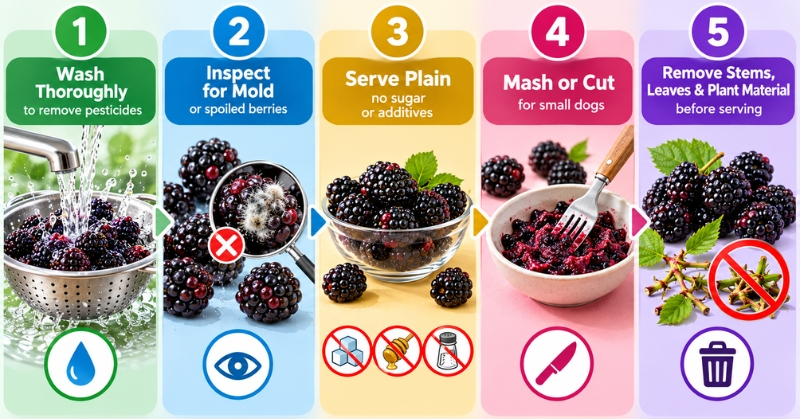
Preparation plays a huge role in safety. Here is how you can prepare blackberries for your canines.
- Step 1: Wash thoroughly to remove pesticides
- Step 2: Inspect for mold or spoiled berries
- Step 3: Serve plain (no sugar or additives)
- Step 4: Mash or cut for small dogs
- Step 5: Remove stems, leaves, and other plant material before serving, as they can be difficult to digest
Avoid blackberry jams, pies, syrups, processed, or baked goods, as they may contain excessive sugar, artificial sweeteners, or other ingredients that are unsafe for dogs. Especially, avoid products containing xylitol, which is highly toxic to dogs.
When Should Dogs NOT Eat Blackberries?
Avoid feeding blackberries if your dog:
- Has a history of digestive upset
- Is prone to diarrhea
- Has a known fruit allergy
Similarly, avoid feeding your dog blackberries if they are contaminated, spoiled, moldy, or prepared with unsafe ingredients (such as xylitol and artificial sweeteners).
Are Blackberry Plants Safe for Dogs?
While the berries are safe, blackberry plants have:
- Thorns that can cause injury to the mouth, skin, or paws
- Leaves that may potentially cause mild stomach irritation
Prevent dogs from chewing on the plant. If you are picking wild berries, make sure they are definitely blackberries and haven’t been exposed to pesticides or other chemicals. Do not let your dog eat unidentified wild berries.
Read more: Are Sultanas Safe for Your Dog?
Blackberries vs. Other Fruits for Dogs
A quick comparison between blackberries and other fruits (blueberries, raspberries, strawberries, and grapes) is shown in the table below.
| Fruit | Safe for Dogs? | Notes |
| Blackberries | Generally safe | Feed plain and in moderation |
| Blueberries | Generally safe | Serve plain and in small amounts |
| Raspberries | Generally safe | Feed in small amounts because they contain natural xylitol |
| Strawberries | Generally safe | Remove stems and serve plain |
| Grapes | Unsafe | Highly toxic |
Also read: What Fruits Can Dogs Eat?
Final Verdict: Can Dogs Eat Blackberries?
Yes, dogs can eat blackberries, and when fed properly, they can be a healthy, enjoyable treat. They offer antioxidants, fiber, and vitamins, but you should always give them in moderation and prepare them safely.
By understanding the right portion sizes, watching for allergies, and avoiding overfeeding, you can confidently share this fruit with your furry friend.
If you are ever unsure, remember this rule: when introducing any new food, start small and observe. If you notice any issues, consult your vet. Your dog’s health and happiness always come first.
Quick Answers for Worried Dog Parents
Yes, blackberries can be good for dogs in moderation. They contain antioxidants, fiber, vitamin C, and vitamin K, which may support immune health and digestion. However, they are not a necessary part of a dog’s diet.
Yes, dogs can eat plain blackberries safely when they are fresh, washed, and fed in moderation. They can be served as an occasional treat. However, overfeeding may cause digestive issues like diarrhea or stomach upset.
No, blackberries should not be fed every day. While they are healthy, they contain natural sugars and fiber that can upset your dog’s stomach if given too often. Blackberries are best served as an occasional treat, not a daily snack.
The amount depends on your dog’s size. General portion size is as follows.
- Small dogs: 1 to 2 blackberries
- Medium dogs: 2 to 4 blackberries
- Large dogs: 4 to 6 blackberries
Blackberries should make up no more than 10% of your dog’s daily calorie intake.
Yes, dogs can eat blackberries raw as long as they are ripe, thoroughly washed, and served plain. Raw blackberries retain the most nutrients and are safe for most dogs when fed in small quantities.
Yes, dogs can eat plain, unsweetened frozen blackberries. Frozen berries can be a refreshing treat, especially in warm weather. For small dogs or puppies, it is best to slightly thaw or mash them to reduce choking risk.
It is uncommon, but some dogs can be allergic to blackberries. Signs of an allergic reaction may include itching, swelling, vomiting, or diarrhea. Always introduce blackberries slowly and monitor your dog for any unusual symptoms.
If your dog eats too many blackberries, they may experience diarrhea, gas, bloating, or stomach discomfort. In most cases, symptoms are mild and resolve on their own, but a vet should evaluate persistent symptoms.
For small dogs and puppies, it is good to mash or cut blackberries. Doing this reduces choking risk. Some larger dogs can usually eat whole blackberries safely, but cutting or mashing is preferable. Supervision is mandatory.
Yes, puppies can eat blackberries, but only in very small amounts. Their digestive systems are more sensitive, so introduce blackberries slowly and avoid frozen or whole berries that could pose a choking hazard. If you are welcoming a new puppy, try our Dog Name Generator to discover fun, meaningful, and personalized dog name ideas.
The berries themselves are safe, but blackberry plants are not ideal for dogs. The thorns can cause injuries, and chewing on leaves or stems may lead to stomach irritation.
If your dog has diabetes, food allergies, digestive problems, or is on a special diet, it is recommended to consult your veterinarian before introducing blackberries or any new food.