
If you have ever opened the fridge, grabbed a cup of applesauce, and felt those hopeful puppy eyes staring back at you, you are not alone. Many dog owners wonder: can dogs eat applesauce, or is it one of those human foods that quietly causes problems later?
The short answer is yes, dogs can eat applesauce — but only the right kind, in the right amount, and not every day. Unfortunately, that simple answer is often buried under confusing, contradictory advice online. Some blogs say applesauce is perfectly healthy, while others warn it can upset your dog’s stomach or even be dangerous.
This guide presents a comprehensive discussion on whether dogs can have applesauce and which applesauce type is safe for your canine.
By the end, you’ll know:
- Whether applesauce is actually safe for dogs
- Which types are safe vs. unsafe (unsweetened, cinnamon, flavored, Mott’s, strawberry, etc)
- Exactly how much applesauce you can give your dog, based on size
- Potential benefits and real risks (diarrhea, sugar overload, stomach upset)
- What to do if your dog eats too much applesauce
Let’s start with the most important question.
Can Dogs Eat Applesauce?
Yes, dogs can eat applesauce — but only unsweetened, plain applesauce in small amounts.
Apples themselves are generally safe for dogs when prepared correctly. Applesauce is simply cooked, mashed apples, so in its most basic form, it is not toxic. However, most store‑bought applesauce products are made for humans, not dogs. That’s where the problem begins.
Some commercial applesauce products contain added sugar, sweeteners such as xylitol, spices, or other ingredients that may not be appropriate for dogs. Xylitol can come under other names, such as birch sugar, wood sugar, E967, birch bark extract, and xylite. Always check the ingredient label before feeding.
So when dog owners ask, “Can my dog eat applesauce?” the more accurate answer is:
Dogs can eat plain, unsweetened applesauce as an occasional treat — not a daily food, and not flavored varieties.
Read more: Can Dogs Eat Longan?
Which Applesauce Is Safe for Dogs?
The table below compares different applesauce to show whether they are safe for dogs.
| Applesauce Type | Safe for Dogs? | What to Check? |
| Plain, unsweetened | Generally safe | No xylitol, added sugar, or unsuitable ingredients |
| No sugar added | Usually safe | Check the ingredient list carefully |
| Cinnamon | Depends on the ingredients | Nutmeg, added sugar, xylitol, other unsuitable ingredients |
| Strawberry | Depends on the ingredients | Xylitol, added sugar, and artificial ingredients |
| Sweetened | Not recommended | Syrups, added sugar, or other sweeteners |
| Applesauce containing xylitol | Avoid completely | Xylitol may be listed as a sweetener |
Why Are Dog Owners Confused About Applesauce Safety?
Your hesitation is valid. Applesauce sits in a gray area between “healthy fruit” and “processed snack.” Here is why there is so much mixed information online:
- Apples are healthy, so people assume applesauce is the same
- Many guides do not explain ingredient differences
- Portion size is rarely mentioned
- Some dogs tolerate applesauce well; others don’t
Also read: Are Tamarind Safe for Dogs?
Is Applesauce Good for Dogs? Potential Benefits
Applesauce is not a superfood for dogs, and it should never be viewed as a necessary part of a dog’s diet. However, when used correctly and sparingly, plain, unsweetened applesauce can offer a few mild benefits that some dog owners may find useful in specific situations.
The key phrase here is used correctly. Most of the benefits disappear — and risks increase — when applesauce is sweetened, flavored, or overfed.
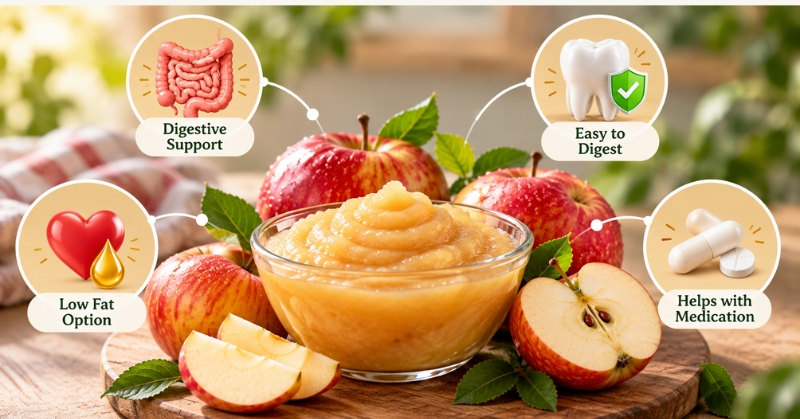
1. Gentle Source of Soluble Fiber
Unsweetened applesauce contains pectin, a type of soluble fiber that may support digestive health in small amounts, but you should not rely on it to treat constipation. If your dog is constipated, ask your veterinarian about an appropriate diet or fiber source.
This is especially relevant for dogs that struggle to chew raw fruits or tolerate fibrous vegetables.
2. Easy-to-Digest Option for Sensitive or Senior Dogs
Because applesauce is cooked, soft, and mashed, it may be easier to digest than raw apple pieces for dogs that have difficulty chewing. Senior dogs, dogs with missing teeth, or dogs recovering from dental procedures should follow their vet’s feeding instructions.
In these cases, a teaspoon of unsweetened applesauce can be an easier way to offer a fruit-based treat without stressing the mouth or jaw.
3. Low-Fat, Low-Cholesterol Treat Alternative
Plain applesauce is naturally low in fat and cholesterol. Plain applesauce is low in fat, but dogs with pancreatitis or other pancreatic disease may require a veterinarian-prescribed diet. Ask your vet before adding applesauce or other human foods.
That said, low-fat does not mean low-sugar — portion control is still essential.
4. Helpful for Giving Medication
Many dog owners use a small spoon of unsweetened applesauce to hide pills or supplements. The soft texture and mild sweetness can make medication time easier, especially for picky dogs.
Always confirm with your veterinarian that applesauce won’t interfere with your dog’s specific medication.
Important Reminder About Benefits
While applesauce does offer these small advantages, it is important to keep expectations realistic. Applesauce does not provide the protein, fats, vitamins, and minerals dogs need to thrive.
Think of applesauce as:
- A treat, not a health supplement
- A temporary solution, not a daily habit
- A supporting snack, not a nutritional upgrade
When fed in moderation and chosen carefully, applesauce can fit into a dog’s diet — but it should never replace balanced, dog-specific foods.
You may also want to read: Benefits of Feeding Asian Pears to Your Dogs
Potential Risks of Feeding Applesauce to Dogs
While applesauce may seem harmless, especially since it’s made from fruit, it does come with several real risks that dog owners often underestimate.
Most problems linked to applesauce don’t happen because it’s instantly toxic, but because it’s overfed, poorly chosen, or misunderstood as a healthy food rather than a treat.
Understanding these risks is essential if you want to avoid digestive issues, weight gain, or more serious health concerns.
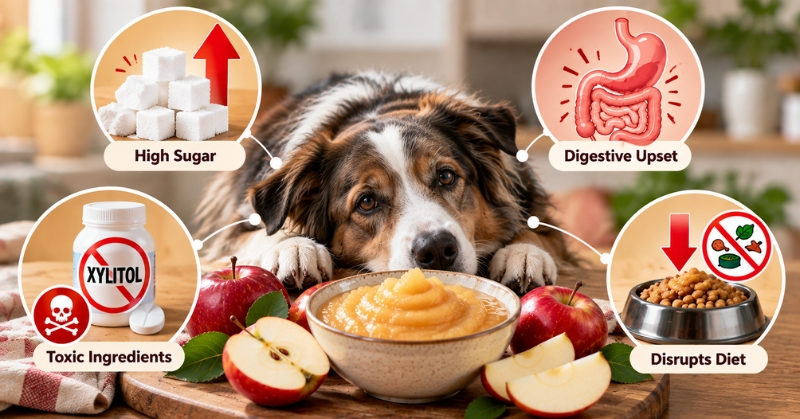
1. High Sugar Content
Even unsweetened applesauce contains natural fruit sugars. Feeding too much applesauce can add unnecessary calories and sugar to your dog’s diet. Dogs with diabetes or other conditions requiring dietary management may need stricter limits, so ask your veterinarian before offering it.
Sweetened applesauce is significantly worse. Added sugars and syrups provide empty calories with no nutritional benefit for dogs.
2. Digestive Upset
One of the most frequently reported problems with applesauce is digestive upset. Dogs that eat too much applesauce may experience:
- Diarrhea or loose stools
- Gas and bloating
- Abdominal discomfort
- Occasional vomiting
Dogs with sensitive stomachs are especially prone to these issues, even with small portions.
3. Dangerous Ingredients in Flavored Applesauce
Some sugar-free or low-calorie applesauce products contain xylitol, an artificial sweetener that is highly toxic to dogs. Even a small amount can cause:
- Rapid drops in blood sugar
- Seizures
- Liver failure
- Death if not treated immediately
This is one of the most serious risks associated with applesauce, and why reading ingredient labels is absolutely critical. If your dog may have eaten applesauce containing xylitol, contact a veterinarian or emergency veterinary clinic immediately, even if your dog currently seems normal. Do not wait for symptoms to appear.
4. Overfeeding Can Disrupt a Balanced Diet
Applesauce offers very little nutritional value compared to a complete dog food. Feeding it too often can:
- Replace essential nutrients in the diet
- Encourage picky eating habits
- Reduce interest in nutritionally balanced meals
Over time, this can negatively affect your dog’s overall health.
Read more: Risks of Giving Acai to Dogs
Can Dogs Eat Unsweetened Applesauce?
Yes — unsweetened applesauce is the safest option for dogs. If you are going to feed applesauce at all, this is the only type you should consider.
What “Unsweetened” Really Means?
Unsweetened applesauce should contain:
- Apples
- Water (optional)
That’s it. No sugar. No spices. No preservatives.
Homemade vs Store‑Bought
- Homemade unsweetened applesauce is ideal because you control the ingredients
- Store‑bought is acceptable if the label is clean
Rule of thumb: If you wouldn’t feed it to a toddler without checking the label, don’t feed it to your dog.
Can Dogs Eat Cinnamon Applesauce?
Dogs may tolerate small amounts of cinnamon, but cinnamon applesauce should be checked carefully for added sugar, xylitol, nutmeg, or other unsuitable ingredients. Plain, unsweetened applesauce is the simpler choice.
Also read: What Other Fruits Can Dogs Eat?
Can Dogs Eat Mott’s Applesauce?
This is one of the most searched questions, and the answer depends on the product.
Is Mott’s Applesauce Safe for Dogs?
- Mott’s unsweetened applesauce is generally considered safe in very small amounts
- Some Mott’s varieties contain added sugar, while others are made without added sugar. Check the specific product’s ingredient list and choose a plain option without xylitol or other unsuitable ingredients.
Even when safe, Mott’s applesauce should be an occasional treat only.
Can Dogs Eat Strawberry Applesauce?
Generally, dogs should avoid store-bought strawberry applesauce, as it usually contains high amounts of preservatives, added sugar, and artificial flavorings.
Dogs can potentially have strawberry applesauce only if it contains dog-safe ingredients and no added sugar or xylitol.
Fresh strawberries in moderation are fine for dogs, but blended, sweetened applesauce versions are unnecessary and can be risky.
Can Dogs Eat Applesauce Every Day?
Applesauce does not need to be part of a dog’s daily diet. If you offer it, keep the amount small and count it toward the 10% of daily calories generally recommended for treats. Dogs with diabetes, obesity, or other medical conditions may need different limits.
Can Puppies Eat Applesauce?
Yes, puppies can eat plain, unsweetened applesauce in small amounts as an occasional treat. Since puppies have developing digestive systems, introduce it gradually and stop if it causes diarrhea, vomiting, gas, or other digestive problems.
Things to Consider When Feeding Your Puppy Applesauce
- Choose unsweetened and plain applesauce
- Check the label carefully
- Start with a tiny amount
- Don’t replace it with the puppy’s regular meal/diet
- Watch for digestive upset
- Avoid flavored varieties
How Much Applesauce Can I Give to My Dog?
Portion size matters more than most people realize. Below are a few suggestions for different dog sizes.
- Small dogs: 1-2 teaspoons
- Medium dogs: 1-2 tablespoons
- Large dogs: 2-3 tablespoons
The above portion sizes are general suggestions, not precisely measured doses. Start with a small spoonful to see how your dog responds. Keep applesauce within the overall treat allowance of no more than about 10% of daily calories, and reduce the amount further for dogs with dietary or medical restrictions.
Your dog’s age and life stage can also affect their nutritional needs and treat portions. Use PawQuery’s Dog Age Calculator to see your dog’s age in human years and better understand their life stage.
Also read: How Many Figs Can You Feed Your Dog?
Is Applesauce a Laxative for Dogs?
Applesauce is not a veterinary laxative. Its fiber may affect stool consistency, but it should not be relied on to treat constipation. If your dog is constipated, consult your veterinarian about the appropriate treatment.
Because applesauce contains soluble fiber and sugar, it may:
- Support normal bowel regularity when given in small amounts
- Cause diarrhea or digestive upset if fed in excess
If your dog is constipated, talk to your vet before using applesauce as a solution.
Can Applesauce Upset a Dog’s Stomach?
Yes, applesauce can upset a dog’s stomach, especially if:
- It is flavored or sweetened
- Too much is given
- Your dog has a sensitive stomach
Symptoms may include:
- Loose stools
- Gas
- Vomiting
- Loss of appetite
Always introduce new foods slowly.
What Are the Side Effects of Applesauce in Dogs?
Common side effects include:
- Diarrhea
- Gas and bloating
- Weight gain over time
Rare but serious side effects occur when applesauce contains xylitol. Vets can guide you better on that.
What Are the Symptoms of Apple Poisoning in Dogs?
Apples themselves are not poisonous, but apple seeds contain cyanide.
Symptoms of poisoning may include:
- Weakness
- Difficulty breathing
- Seizures
Commercial and properly prepared applesauce is normally seed-free, but homemade applesauce should be prepared without apple seeds, stems, or cores.
How Much Apple Can a Dog Eat Per Day?
For fresh apples:
- Small dogs: 1-2 small slices
- Medium dogs: 2-4 slices
- Large dogs: A few slices
Applesauce should always be less than whole apple portions. Consult your vet for a more accurate dosage.
What Applesauce Is Dog Safe?
Dog‑safe applesauce must be:
- Unsweetened
- Plain
- Free of spices
- Free of artificial sweeteners
Homemade applesauce is best.
What to Do If a Dog Eats Too Much Applesauce?
If your dog eats a large amount of applesauce, monitor for vomiting, diarrhea, abdominal discomfort, weakness, or other unusual signs. Contact your vet if symptoms are severe, persistent, or concerning. If the product contains xylitol, seek veterinary care immediately.
What Is the Healthiest Snack to Give a Dog?
Healthier alternatives you can give to your dog include:
- Fresh apple slices (no seeds)
- Blueberries
- Carrots
- Vet‑approved dog treats
Applesauce should never replace balanced treats.
Also read: What Human Foods Can Dogs Eat?
Final Verdict: Should Dogs Eat Applesauce?
Yes, but cautiously and occasionally. Plain, unsweetened applesauce can be a safe, small treat for dogs when fed in moderation. Avoid applesauce with added sugar, xylitol, nutmeg, or other unsuitable ingredients.
When in doubt, remember this rule: Treat applesauce like dessert — not a daily food. For accurate assistance, consulting a vet is recommended. Your dog’s health will thank you for it.
What Dog Owners Often Ask?
Yes, dogs can eat applesauce safely only if it is plain and unsweetened. Applesauce made with just apples (and water) can be given as an occasional treat. Do not assume sugar-free or no-sugar-added applesauce is safe. Check the ingredient list carefully and never feed a product containing xylitol.
Your dog can eat store-bought applesauce only if the ingredient list is clean. It should contain no added sugar, cinnamon, preservatives, or artificial sweeteners like xylitol. Always read the label before feeding.
No, dogs should not eat applesauce every day. Even unsweetened applesauce contains natural sugars and lacks essential nutrients. Feeding it too often can lead to weight gain or digestive upset. Limit applesauce to 1-2 times per week.
It is best to avoid applesauce with cinnamon. While cinnamon isn’t highly toxic, it can irritate a dog’s mouth and stomach and often comes with added sugar. Plain applesauce is a much safer option.
Yes, puppies can eat homemade applesauce in small amounts if it is made from cooked apples without added sugar, xylitol, spices, or other potentially harmful ingredients. Let it cool completely, use a smooth texture, and introduce only a small amount initially to reduce the risk of digestive upset.
If a puppy has eaten applesauce containing xylitol, treat it as an emergency and contact a vet or emergency animal clinic immediately, even if the puppy currently appears normal.
Applesauce is not a laxative, but it contains soluble fiber that may loosen stools.
Yes, applesauce can upset a dog’s stomach, especially if it is sweetened, flavored, or fed in large amounts. Symptoms may include diarrhea, gas, or vomiting.
Possible side effects include loose stools, bloating, gas, weight gain, and sugar-related energy spikes. Serious reactions are rare but possible if the applesauce contains toxic ingredients like xylitol.
Neither is better overall. Fresh apple pieces provide more chewing texture, while applesauce has a softer texture and may be easier for some dogs to eat. The sugar content of applesauce varies by product, so check the label and choose an unsweetened variety.