
A fresh question begs in the broad arena of canine curiosity, where dogs are known to seek out adventures in every nook and cranny: Can dogs explore the world of acai, that vivid and enticing berry famous for its delightful taste?
As pet parents, we are trying to discover the truth behind this berry mystery and see if our four-legged friends can get in on the acai action.
This guide presents a comprehensive discussion on “Can dogs eat acai?” It also lists the risks and possible benefits of this fruit for dogs.
Can Dogs Eat Acai Berries?
Plain acai berries in very small amounts is not toxic to dogs, but it is not recommended as your canine’s regular treat.
Some pet care sources raise concerns about theobromine, a compound associated with chocolate poisoning in dogs. However, the amount of theobromine present in ordinary acai pulp is not clearly established by the evidence reviewed.
If your dog has already eaten acai, check the product’s ingredients and contact your vet for advice based on the amount consumed, your dog’s size, and the product’s formulation.
Can Dogs Eat Acai Bowls or Smoothies?
Both acai bowls and smoothies can also pose additional risks because of ingredients such as chocolate, grapes, raisins, and certain sweeteners. The safest approach is not to intentionally feed acai to your dog.
Read more: Can Dogs Eat Apricots?
Understanding the Dangers of Giving Acai to Dogs
Before introducing acai into your dog’s diet, look at potential hazards and drawbacks to ensure that your dog’s well-being remains a primary priority.
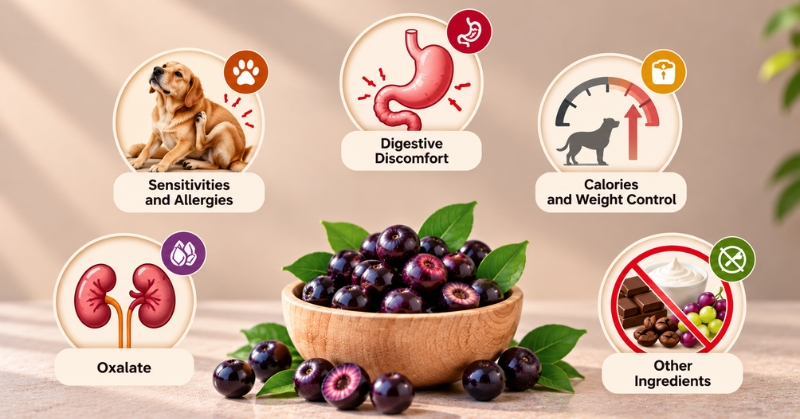
1. Digestive Discomfort
Acai contains moderate to high amounts of fiber, which may not be suitable for many dogs. Too much fiber introduced rapidly may cause digestive discomforts, such as bloating, gas, or an upset stomach. As with any nutritional change, starting slowly and closely evaluating your dog’s reaction is critical.
2. Sensitivities and Allergies
While acai is not a frequent dog allergy, individual sensitivities can differ. After any accidental ingestion, watch for symptoms like itching, vomiting, diarrhea, swelling, or behavioral abnormalities.
3. Calories and Weight Control
The calorie content of acai products varies by preparation, and added sugars or toppings can increase it substantially. Extra calories can contribute to weight gain when they exceed a dog’s energy needs. Acai’s suitability for dogs has not been adequately established, so it should not be used as a routine treat or nutritional supplement.
4. Oxalate
Oxalates can contribute to calcium oxalate kidney stone formation in dogs by binding with calcium. However, there is insufficient evidence that oxalate levels in acai are high enough to increase this risk in dogs.
5. Other Ingredients
Avoid giving dogs acai bowls or desserts containing chocolate, caffeine-containing ingredients, grapes, raisins, or xylitol. Other additions, including high-fat toppings and dairy products, may also cause digestive problems.
Also read: Risks of Giving Figs to Dogs
Can Acai Offer Any Benefits to Dogs?
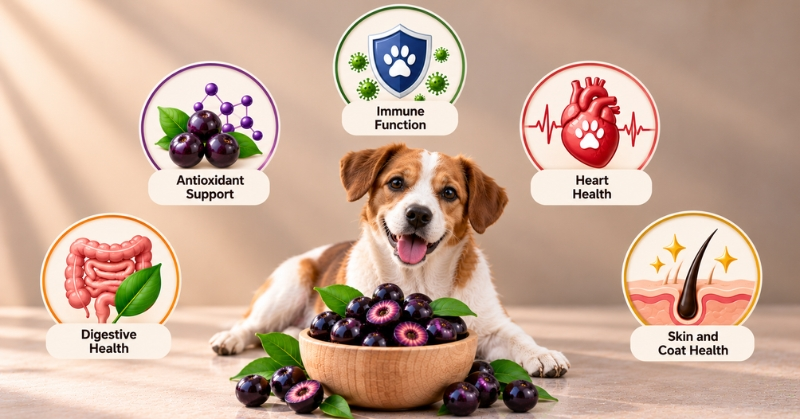
There are a few ways acai can support your canine’s health.
- Antioxidant Support: Acai contains anthocyanins and other polyphenols that may help protect cells from oxidative damage. However, there is limited evidence for acai-specific antioxidant support for dogs.
- Heart Health: Pure, plain acai contains healthy fats that may support a dog’s heart health and general wellness. However, it should not be used as a primary support or treatment for a dog’s cardiovascular health.
- Digestive Health: The consumption of acai in very small amounts may contribute to normal bowel function due to its fiber content. However, there is no established evidence.
- Skin and Coat Health: Fatty acids in acai may support normal skin and coat health as part of a balanced diet. At the same time, this benefit is unproven.
- Immune Function: Acai contains antioxidants that may support normal cellular function. This may contribute to a dog’s overall health. However, there is no direct evidence of acai improving dogs’ immunity.
Learn more: Benefits of Blackberries for Dogs
What to Do If My Dog Consumes an Excessive Amount of Acai?
If your dog has taken a large amount of acai, here is what you should do:
- Be Calm: While this is concerning, remaining calm is critical. Panicking will not help the problem and will make it more difficult to make informed decisions.
- Identify the Product and Amount: Determine whether your dog ate plain acai pulp, concentrated powder, or a prepared bowl. Check the ingredient list for chocolate, caffeine-containing ingredients such as guarana, grapes, raisins, and xylitol.
- Watch for Warning Signs: Look for vomiting, diarrhea, restlessness, unusual panting, tremors, weakness, or other abnormal behavior. If these occur, seek veterinary care promptly.
- Contact Your Vet: Contact a vet if your dog has eaten a substantial or unknown amount, consumed a concentrated product, or may have ingested potentially toxic added ingredients. Do not wait for symptoms to appear before seeking advice about a potentially hazardous exposure.
- Follow Professional Instructions: Keep the packaging and ingredient list available and tell the vet your dog’s approximate weight, the estimated amount eaten, and when the ingestion occurred. Do not induce vomiting or give home remedies unless a vet specifically instructs you to do so.
- Future Prevention: Accidents occur, but prevention is essential. Keep acai and other foods that aren’t a regular part of your dog’s diet out of their reach. Always be cautious when introducing new meals to your dog. If you wish to do so, check with your veterinarian first.
Read more: What to Do If a Dog Eats Too Much Applesauce?
The History of Acai Feeding to Dogs
Acai berries have been consumed by Indigenous communities in the Amazon for generations, but their use in dog diets is a relatively recent trend. As acai gained popularity as a human food, some dog owners began exploring its potential benefits for pets.
However, limited research on its safety in dogs means its nutritional benefits and potential risks remain unclear. Vets recommend caution when introducing unfamiliar foods into a dog’s diet.
What Fruits Can Dogs Eat Instead of Acai?
If you want to share a fruity treat with your dog, several alternatives have better-established safety guidance.
| Fruit | How to Serve? |
| Blueberries | Offer a few washed berries, fresh or frozen, in an appropriate size for your dog. |
| Strawberries | Wash, remove the stems, and cut into small pieces. |
| Watermelon | Serve only the seedless flesh, with the rind removed. |
| Apples | Remove the core and seeds, then cut the flesh into bite-sized pieces. |
Introduce new foods gradually and offer them in moderation. Treats should complement a nutritionally complete diet rather than replace it. Not sure whether your dog is still a puppy or an adult? Use PawQuery’s Dog Age Calculator to estimate your dog’s age in human years and better understand their life stage.
Learn more: What Fruits Can Dogs Eat?
Final Thoughts
The safest approach is not to intentionally feed acai to dogs because its safety has not been adequately established. Some sources raise concerns about potentially harmful compounds, although the evidence regarding theobromine in ordinary acai pulp remains uncertain.
Acai bowls and commercial preparations deserve particular caution because their added ingredients may cause additional hazards. If your dog eats acai, check the ingredients and contact your vet if the amount is substantial or unknown, the product contains potentially toxic ingredients, or your dog develops symptoms.
What Dog Owners Often Ask?
Plain acai has not been established as toxic to dogs, but its safety is uncertain. Acai products containing chocolate, caffeine, or xylitol can be dangerous.
It is best to avoid giving dogs acai powder because its safety has not been established.
It is best not to prepare acai-based treats for dogs because the safety of acai itself has not been adequately established. Avoid ingredients such as chocolate, caffeine-containing products, grapes, raisins, and xylitol, which can pose serious risks.
No, dogs should not eat acai seeds. The hard seed is not the edible part, and may pose a physical hazard if swallowed. If your dog swallows an acai seed, contact your vet for advice based on your dog’s size and the circumstances.