Dogs are naturally curious. Whether they are sniffing under the kitchen sink, chewing on a forgotten tube of lotion, or licking a freshly cleaned floor, they often explore their surroundings with their noses and mouths.
Unfortunately, many everyday products that seem harmless to people can pose serious health risks to our canine companions.
From cleaning supplies and medications to certain foods and garden chemicals, household items that are toxic to dogs can be found in nearly every room of your home. While some products may only cause mild stomach upset, others can damage vital organs, trigger seizures, or become life-threatening if not treated promptly.
The level of risk depends on several factors, including the ingredient involved, the amount consumed, your dog’s size, age, and overall health.
If you’re wondering what household items are toxic to dogs, this guide lists items you should keep away from your dog.
Quick Answer: What Household Items Are Toxic to Dogs?
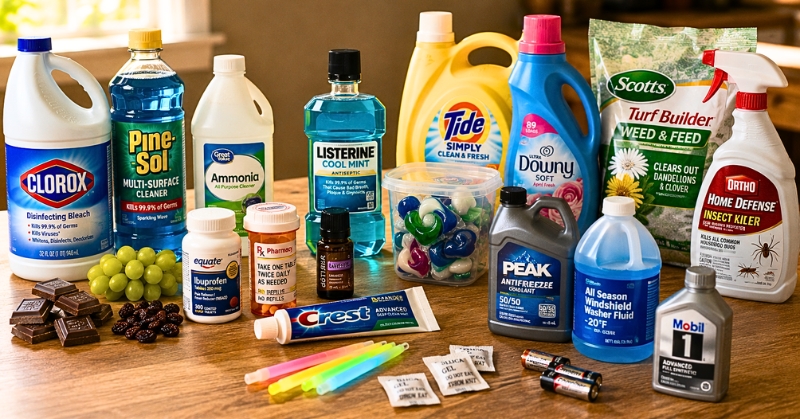
Many everyday products can be dangerous for dogs if swallowed, inhaled, or absorbed through the skin. Some of the common household items that are toxic to dogs are listed in the table below.
| Household Category | Potentially Toxic Items |
| Cleaning Products | Bleach, Fabuloso, ammonia, Lysol, Pine-Sol, borax, boric acid, concentrated disinfectants |
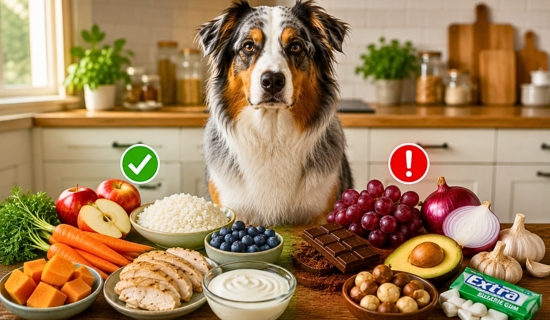
| Human Foods | Chocolate, onions, garlic, grapes, raisins, xylitol-containing products, alcohol, coffee |
| Human Medications | Pain relievers, antidepressants, sleep aids, muscle relaxants, prescription medications |
| Personal Care Products | Toothpaste containing xylitol, mouthwash, essential oils (e.g., vanilla oil), lotions, skin ointment (e.g., Aquaphor), and rubbing alcohol |
| Laundry Supplies | Detergent pods, liquid detergents, fabric softeners, dryer sheets |
| Garden Products | Fertilizers, herbicides, insecticides, wasp sprays, and rodenticides |
| Garage Chemicals | Antifreeze, windshield washer fluid, motor oil, paint thinners |
| Household Miscellaneous | Glow sticks, silica gel packets, batteries, certain paints, Play-Doh, and some adhesives |
Not every exposure results in severe poisoning, but it is impossible to determine the level of danger based on symptoms alone.
What Common Household Items are Toxic to Dogs?
Categories of household items that are toxic to dogs include human foods, laundry supplies, personal care products, cleaning products, garden products, and garage chemicals. Let’s take a look at a quick comparison table.
| Household Category | Common Toxic Items | Main Danger | Severity | Action Required |
| Human Foods | Chocolate, Grapes, Raisins, Onions, Garlic | Organ damage, kidney failure, and anemia | High | Contact the vet immediately |
| Cleaning Products | Bleach, Lysol, Fabuloso, Ammonia, Boric Acid | Burns, poisoning, breathing problems | High | Prevent licking; seek veterinary advice |
| Laundry Supplies | Detergent Pods, Liquid Detergent, Fabric Softener, Dryer Sheets | Chemical burns, digestive irritation | Moderate High | Monitor closely; call vet if symptoms develop |
| Personal Care Products | Toothpaste, Mouthwash, Essential Oils, Lotion | Xylitol poisoning, alcohol toxicity, irritation | High | Immediate vet care for xylitol exposure |
| Garden Products | Fertilizers, Herbicides, Insecticides, Rodenticides | Poisoning, neurological damage | High | Emergency vet care |
| Garage Chemicals | Antifreeze, Gasoline, Paint Thinner, Washer Fluid | Kidney failure, lung damage, seizures | Extremely High | Emergency treatment immediately |
Let’s now explore each household category one by one.
Human Foods
Below is a list of human foods that you should never feed your dog.
Chocolate
Chocolate contains theobromine and caffeine, both of which are highly toxic to dogs. Even small amounts can cause vomiting, diarrhea, restlessness, rapid heart rate, tremors, seizures, or death. Dark chocolate and baking chocolate contain the highest toxin levels. Always keep chocolate products securely stored and out of your dog’s reach.
Onions
Onions contain compounds that damage a dog’s red blood cells, potentially leading to hemolytic anemia. Raw, cooked, powdered, or dehydrated onions are all dangerous. Symptoms may include weakness, pale gums, vomiting, and reduced appetite. Avoid feeding any foods containing onions, including soups, sauces, and seasoning blends.
Garlic
Garlic belongs to the allium family and is toxic to dogs, although it is generally more concentrated than onions. It can damage red blood cells and cause anemia, especially after repeated exposure. Signs include lethargy, weakness, vomiting, and pale gums. Never intentionally feed garlic to your dog.
Grapes
Grapes can cause sudden kidney failure in dogs, even when eaten in very small amounts. Researchers still do not know exactly why some dogs are highly sensitive. Symptoms include vomiting, lethargy, loss of appetite, and decreased urination. Seek immediate vet care if your dog eats grapes.
Raisins
Raisins are dried grapes and are equally toxic to dogs. Even a few raisins may trigger acute kidney failure in susceptible dogs. Early signs include vomiting, weakness, and dehydration. Since toxicity varies between dogs, treat every raisin ingestion as a medical emergency requiring prompt vet attention.
Laundry Supplies
The following are the laundry supplies you should avoid feeding your canine.
Detergent Pods
Laundry detergent pods contain highly concentrated cleaning chemicals that can severely irritate a dog’s mouth, throat, stomach, and eyes. Biting into a pod may release concentrated detergent, causing drooling, vomiting, breathing difficulties, or chemical burns. Store detergent pods in sealed containers well beyond your dog’s reach.
Liquid Detergents
Liquid laundry detergents contain surfactants that may irritate a dog’s digestive tract and skin if swallowed or spilled. Ingestion can cause vomiting, drooling, diarrhea, and stomach discomfort. Concentrated formulas pose greater risks. Keep detergent bottles tightly closed and immediately clean up any accidental spills around pets.
Fabric Softeners
Fabric softeners contain chemicals that can irritate a dog’s mouth, skin, and digestive system. Liquid softeners are particularly hazardous because they may cause chemical burns if swallowed. Symptoms include excessive drooling, vomiting, and mouth irritation. Store fabric softeners securely and prevent dogs from licking freshly treated laundry.
Dryer Sheets
Dryer sheets may seem harmless, but they contain detergents and softening agents that can irritate a dog’s mouth and stomach. Swallowing a used sheet may also create an intestinal blockage. Symptoms include vomiting, drooling, or digestive discomfort. Dispose of used dryer sheets immediately and safely.
Personal Care Products
You should always keep the following personal care products away from your pet.
Lotions
Many lotions contain ingredients that may upset a dog’s stomach or irritate its skin if licked or swallowed. Some medicated lotions include ingredients that are significantly more toxic. Dogs often lick lotion from their owner’s skin, which makes accidental exposure common. Keep lotions stored securely and allow them to dry completely.
Mouthwash
Mouthwash often contains alcohol, xylitol, essential oils, or fluoride, all of which can be harmful to dogs. Ingestion may cause vomiting, low blood sugar, coordination problems, or alcohol poisoning. Even small amounts can be dangerous. Keep mouthwash bottles tightly sealed and stored away from curious pets.
Skin Ointment
Skin ointments like Aquaphor are generally not highly toxic, but swallowing large amounts may cause vomiting, diarrhea, or stomach upset. Some medicated ointments contain ingredients that are more dangerous to dogs. Prevent pets from licking freshly applied ointments by using protective coverings or vet-recommended recovery collars.
Toothpaste Containing Xylitol
Many human toothpastes contain xylitol, an artificial sweetener that is extremely toxic to dogs. Even tiny amounts can trigger a rapid insulin release. It causes life-threatening low blood sugar and potential liver failure. Symptoms develop quickly. Never brush your dog’s teeth with human toothpaste; use only pet-safe toothpaste.
Essential Oils
Essential oils are highly concentrated plant extracts that can be toxic to dogs through ingestion, inhalation, or skin contact. Vanilla essential oil and many others may cause drooling, vomiting, breathing problems, or neurological symptoms. Never apply essential oils directly to dogs without veterinary guidance.
Cleaning Products
The cleaning products listed below can be toxic to your dog, so it is better to avoid them.
Fabuloso
Fabuloso is a household cleaner containing surfactants and fragrances that may irritate a dog’s digestive system if swallowed. Exposure can cause drooling, diarrhea, vomiting, and stomach discomfort. Concentrated solutions present greater risks. Always store cleaning products safely and prevent pets from accessing freshly cleaned surfaces until dry.
Bleach
Bleach is highly irritating to a dog’s mouth, throat, stomach, eyes, and skin. Drinking bleach solutions may cause vomiting, drooling, abdominal pain, and tissue irritation. Mixing bleach with other cleaners creates dangerous fumes that also affect pets. Store bleach securely and rinse cleaned surfaces thoroughly before allowing access.
Ammonia
Ammonia-based cleaners release strong fumes that can irritate a dog’s respiratory system, eyes, and nose. Swallowing concentrated ammonia products may cause burns to the mouth and digestive tract. Symptoms include coughing, drooling, vomiting, and breathing difficulty. Always use ammonia products in well-ventilated areas away from pets.
Boric Acid
Boric acid is commonly found in insect control products and certain cleaning supplies. Dogs that ingest significant amounts may experience vomiting, diarrhea, weakness, or skin irritation. Repeated exposure increases health risks. Keep boric acid products securely stored and prevent pets from accessing treated areas until they are safe.
Lysol
Lysol disinfectants may contain chemicals that are harmful to dogs if inhaled, licked, or swallowed. Exposure can cause mouth irritation, vomiting, breathing problems, or skin irritation. Always follow product directions carefully and allow disinfected surfaces to dry completely before letting your dog return to the area.
Garden Products
Below are the garden products your dog should never lick or inhale.
Fertilizers
Many lawn and garden fertilizers contain chemicals that may upset a dog’s stomach or cause poisoning if consumed. Some fertilizers also include pesticides, increasing the danger. Symptoms include vomiting, diarrhea, drooling, and lethargy. Keep fertilizer bags sealed and prevent dogs from accessing recently treated lawns or gardens.
Herbicides
Herbicides are designed to kill unwanted plants but may also pose health risks to dogs. Exposure through licking treated grass or accidental ingestion can cause vomiting, drooling, breathing problems, or skin irritation. Always follow label instructions and keep pets away until treated areas are completely dry.
Insecticides
Insecticides contain chemicals intended to kill insects, but they can also poison dogs. Depending on the product, symptoms may include drooling, vomiting, tremors, seizures, difficulty breathing, or weakness. Always store insecticides safely and follow application instructions carefully before allowing pets back into treated areas.
Wasp Sprays
Wasp sprays contain powerful insecticides that are highly toxic to dogs if inhaled, swallowed, or absorbed through the skin. Exposure may cause drooling, tremors, breathing difficulty, seizures, or collapse. Never spray these products near pets, and keep treated areas inaccessible until they are completely safe.
Rodenticides
Rodenticides are among the most dangerous household poisons for dogs. Different formulations cause internal bleeding, kidney failure, brain swelling, or severe vitamin D toxicity. Symptoms may not appear immediately. Any suspected rodenticide exposure requires emergency vet treatment, even if your dog appears normal initially.
Garage Chemicals
The following garage chemicals can be extremely toxic to your dog, so keep them all out of your pet’s range.
Antifreeze
Antifreeze containing ethylene glycol is extremely toxic to dogs and has a sweet taste that attracts them. Even tiny amounts can cause rapid kidney failure and death without prompt treatment. Symptoms include vomiting, staggering, excessive thirst, and seizures. Clean spills immediately and store antifreeze securely.
Motor Oil
Used motor oil contains harmful contaminants that can irritate a dog’s digestive system if swallowed. Although small amounts may primarily cause stomach upset, repeated exposure is unhealthy. Dogs may also develop skin irritation after contact. Clean garage spills promptly and prevent pets from accessing maintenance areas.
Gasoline
Gasoline is poisonous to dogs if swallowed or inhaled. It can cause vomiting, dizziness, breathing difficulty, and serious lung damage if aspirated into the airways. Even small amounts require vet evaluation. Store gasoline in approved containers and immediately clean any spills in garages or driveways.
Paint Thinners
Paint thinners contain petroleum solvents that are highly toxic to dogs. Swallowing even a small amount can cause severe stomach irritation and dangerous aspiration pneumonia. Symptoms include coughing, vomiting, weakness, and breathing difficulty. Always keep paint products tightly sealed and inaccessible to curious pets.
Windshield Washer Liquid
Windshield washer fluid often contains methanol, a highly toxic alcohol that can seriously poison dogs. Ingestion may cause vomiting, loss of coordination, seizures, blindness, or death. Because even small amounts are dangerous, store washer fluid securely and clean up any leaks or spills immediately.
Final Words
Knowing what household items are toxic to dogs is a simple way to protect your dog from preventable accidents. Secure storage of toxic foods, cleaning products, medications, and other hazardous items helps you create a safer home for your dog.
If you ever suspect your dog has been exposed to a poisonous substance, contact your vet immediately rather than trying home remedies. Quick action and proper prevention can make all the difference in keeping your furry companion healthy and safe.
Frequently Asked Questions: (FAQs)
Highly toxic products such as antifreeze, rodenticides, certain human medications, xylitol, concentrated pesticides, and some household chemicals can become life-threatening if enough is consumed.
Cosmos flowers are safe for dogs, as they do not contain chemicals that can poison your dog.
Small amounts usually are not dangerous, but large quantities can interfere with your dog’s electrolyte balance and may become a medical emergency.