

If you have ever enjoyed a sweet, juicy fig and wondered whether you can share it with your dog, you are not alone. Many pet owners look for natural treats—but not all human foods are safe for dogs.
So, can dogs eat figs? Yes, but only fresh figs in moderation. While figs contain some beneficial nutrients, they also come with risks, especially if overfed or given in the wrong form.
This comprehensive guide breaks down everything you need to know—from benefits and risks to safe feeding tips and what is better for your canines.
Are Figs Safe for Dogs?
Yes, fresh figs are generally safe for dogs in moderation. They contain:
- Fiber (supports digestion)
- Natural sugars (quick energy)
- Vitamins like A, B, and K
- Minerals such as potassium and calcium
However, “safe” doesn’t mean unlimited. Figs are high in sugar and fiber, which can quickly upset your dog’s stomach if overfed.
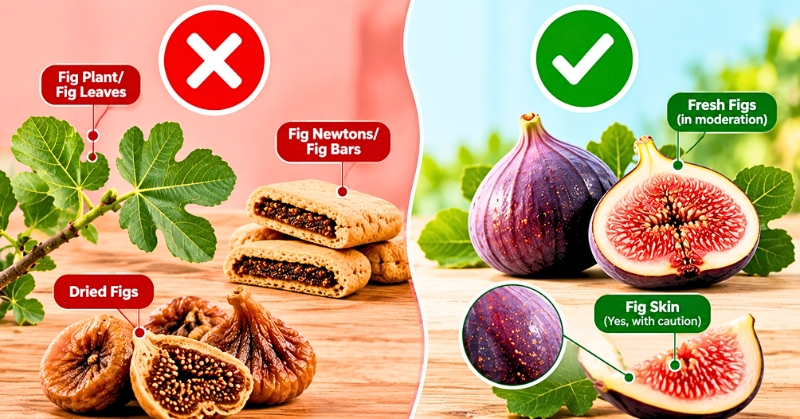
The table below shows which form of figs dogs can eat and what to avoid.
| Fig Form | Can Dogs Eat It? | Key Consideration |
| Ripe fresh fig flesh | Yes, in small amounts | Occasional treat only |
| Fig skin | Generally okay | Remove if your dog has trouble tolerating it |
| Dried figs | Not recommended | More concentrated in sugar/calories |
| Frozen fresh fig | In small pieces | Avoid large/hard chunks |
| Fig jam | Best avoided | Usually high in added sugar |
| Fig Newtons/fig bars | Best avoided | Added sugar and other ingredients |
| Fig leaves/stems/branches | No | Can cause irritation |
| Fig sap | No | Can irritate skin and mouth |
| Unripe fig | Avoid | May contain more irritating latex/sap |
Nutritional Benefits of Figs for Dogs
Fresh figs can offer a small nutritional boost when given occasionally and in moderation. While they should never replace a balanced dog diet, they do contain some nutrients that may support your dog’s overall health:
- Dietary Fiber: It helps regulate digestion, supports gut health, and may relieve mild constipation.
- Vitamin A: It supports vision, skin health, and immune function.
- Vitamin C: It acts as an antioxidant, helping reduce inflammation and support immunity.
- B Vitamins (B6, etc.): They aid in energy production and proper brain function.
- Potassium: It supports heart health, muscle function, and fluid balance.
- Calcium: It contributes to strong bones and teeth.
Figs also contain natural antioxidants, which help combat free radicals and may support long-term cellular health.
Do Dogs Actually Need Figs?
Not really. Dogs do not require figs in their diet because high-quality commercial dog food already provides all essential nutrients in the right proportions.
While figs can be a healthy occasional treat, feeding them regularly or in large amounts can do more harm than good due to their high sugar content.
Curious about your dog’s real age in human years? Use our Dog Age Calculator to get a quick, accurate estimate and better understand your dog’s health and life stage.
Also read: Are Apricots Safe for Dogs?
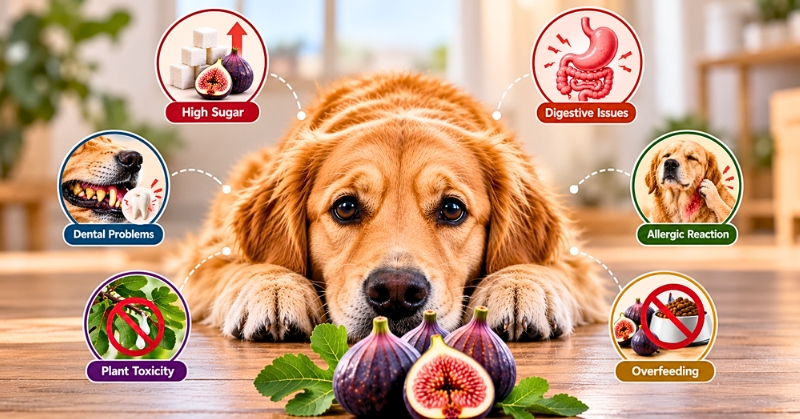
Risks of Feeding Your Dog Figs
While figs may seem like a healthy, natural treat, they come with several potential risks that every dog owner should understand before feeding them. Even small mistakes—like overfeeding or offering the wrong form — can lead to health issues.
1. High Sugar Content
Fresh figs contain natural sugars, so they should be offered only as an occasional treat. Eating excessive amounts can add unnecessary calories and may contribute to weight gain.
Dogs with diabetes or other conditions requiring dietary management should only receive figs if their vet considers them appropriate.
Moreover, frequent sugary treats can contribute to poor dental health, especially when overall dental care is inadequate.
2. Digestive Issues
Because figs are rich in fiber and sugar, they can be hard on a dog’s digestive system if overconsumed.
- Diarrhea
- Vomiting
- Gas or bloating
- General stomach discomfort
Even healthy dogs can experience these symptoms if they eat too many figs at once.
3. Allergic Reactions
Some dogs may not tolerate new foods well. After giving a small amount of fresh fig for the first time, monitor your dog for vomiting, diarrhea, itching, swelling, or other unusual symptoms.
If a reaction occurs, stop feeding figs and contact your veterinarian if symptoms are severe or persistent.
4. Fig Plant Toxicity
Dogs should not chew or eat fig leaves, stems, branches, or sap. Ficus plant material contains irritating compounds that can cause mouth, gastrointestinal, and skin irritation. Keep dogs away from fig trees and seek veterinary advice if plant material is eaten.
The sap from fig leaves and shoots can irritate the skin and may cause a photosensitivity-type skin reaction. Dogs that come into contact with sap should be prevented from licking the affected area, and vet advice is appropriate if significant irritation develops.
Possible symptoms include:
- Drooling
- Vomiting
- Skin irritation or burns
- Sensitivity to sunlight
If you have a fig tree at home, make sure your dog cannot access it.
5. Risk of Overfeeding
Since figs are small and easy to eat, it is tempting to give more than the recommended amount.
- Too many treats can unbalance your dog’s diet
- Excess calories may lead to long-term health issues
- Regular overfeeding can create poor eating habits
You may also want to read: Risks Associated with Feeding Nectarines to Your Dog
What Type of Figs Dogs Can and Can’t Eat?
Not all figs are created equal when it comes to your dog’s safety. While the fresh fruit can be given in moderation, other forms of figs vary significantly in terms of sugar content, processing, and potential toxicity. Understanding these differences is essential before sharing any fig-based food with your pet.
1. Can Dogs Eat Fresh Figs?
Yes, fresh, ripe fig flesh is the preferred form if you choose to give your dog figs.
- Provide small, bite-sized pieces
- Wash thoroughly to remove pesticides or dirt
- Remove the stem before serving
- Feed occasionally, not daily
Fresh figs retain natural nutrients without the added sugars or preservatives found in processed versions.
2. Can Dogs Eat Dried Figs?
Dried figs are more concentrated in calories and natural sugars than fresh figs. This makes them easier to overfeed. Therefore, they are not an ideal routine treat, particularly for dogs that need strict calorie or carbohydrate control.
Moreover, dried figs can cause digestive upset, including diarrhea. The sticky and chewy texture may contribute to dental issues like plaque buildup and cavities.
Read more: Can Dogs Eat Frozen Dried Strawberries?
3. Can Dogs Eat Fig Newtons or Fig Bars?
It is best not to intentionally feed dogs commercial fig bars, fig newtons, other cookies. These products may contain added sugar, refined flour, high calorie density, or other ingredients that aren’t appropriate as regular dog treats. Always check the ingredient list, especially for ingredients that are toxic to dogs, such as xylitol.
4. Can Dogs Eat Fig Plants or Fig Leaves?
No, dogs shouldn’t eat fig plants or fig leaves, as they are toxic.
- Leaves, stems, and sap contain compounds that can irritate or harm dogs
- Contact or ingestion may lead to:
- Drooling
- Skin irritation
- Vomiting
- Sensitivity to sunlight
Keep dogs from chewing or eating fig leaves, stems, branches, or other plant material, and prevent direct contact with the plant’s sap.
5. Can Dogs Eat Fig Skin?
Yes, but with caution. Fig skin is edible, but if your dog has a sensitive stomach, you can remove the skin and offer only the soft flesh.
For the simplest preparation, offer small pieces of the soft fig flesh and remove the stem and other plant material.
How Many Figs Can Dogs Eat?
When it comes to feeding figs to dogs, portion control is crucial. Even though fresh figs are not toxic, their high sugar and fiber content means they should only be given in very small amounts.
There is no universally established number of figs that is appropriate for every dog.
- Start with a small bite of fresh fig flesh and monitor your dog for digestive upset.
- If tolerated, keep future portions small and account for the calories as part of your dog’s daily treat allowance.
- Dogs with diabetes, obesity, gastrointestinal disease, or prescription diets should receive individualized advice from a professional vet.
Always introduce figs gradually and never make them a regular part of your dog’s diet. For expert assistance, always consult your vet.
Follow the 10% Treat Rule
A good rule of thumb is:
- Treats (including figs) should make up no more than 10% of your dog’s daily calorie intake
- The remaining 90% should come from balanced dog food
Overfeeding—even with healthy treats—can lead to weight gain and nutritional imbalance.
How Often Can Dogs Eat Figs?
- Occasionally
- Not suitable as a daily snack
- Best used as a rare reward or treat
If you are planning to breed your dog, use our Dog Pregnancy Calculator to accurately estimate due dates and prepare in advance. Unlike traditional pregnancy calculators, this tool helps you monitor week-by-week pregnancy signs and offer practical tips accordingly.
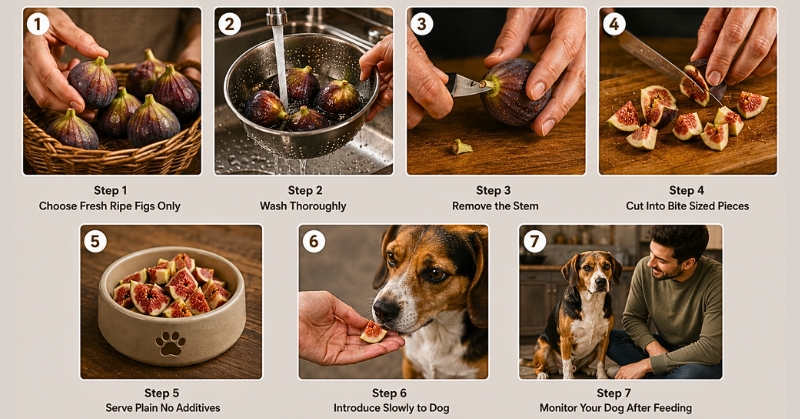
How to Safely Feed Figs to Dogs?
If you decide to give your dog figs, proper preparation and careful feeding are essential to minimize any risks. Even safe foods can cause problems if they are not handled correctly, so following a simple step-by-step approach can help keep your dog healthy.
Step 1: Choose Fresh, Ripe Figs Only
- Always select fresh, fully ripe figs
- Avoid dried, canned, or processed fig products
- Make sure the fruit is free from mold or spoilage
Fresh figs are the safest because they don’t contain added sugars or preservatives.
Step 2: Wash Thoroughly
- Rinse the fig under clean running water
- This helps remove pesticides, dirt, and bacteria from the skin
Even organic fruits should be washed before feeding.
Step 3: Remove the Stem (and Inspect the Skin)
- Cut off the stem completely
- Check for any damaged or overly tough skin
While fig skin is generally safe, removing any questionable parts reduces the chance of irritation.
Step 4: Cut Into Bite-Sized Pieces
- Slice the fig into small, manageable pieces
- This reduces the risk of choking, especially for smaller dogs
Smaller portions also make it easier to control how much your dog eats.
Step 5: Serve Plain — No Additives
- Do not add sugar, honey, cream, or spices
- Avoid mixing figs with other human foods
Dogs should only eat figs in their natural, plain form.
Step 6: Introduce Slowly
- Start with one small piece
- Monitor your dog afterward for vomiting, diarrhea, itching, swelling, or other unusual symptoms
This helps you identify any digestive issues or allergic reactions early.
Step 7: Monitor Your Dog After Feeding
Watch for any unusual symptoms, such as:
- Vomiting or diarrhea
- Itching or skin irritation
- Lethargy or discomfort
If any symptoms appear, stop feeding figs and consult a veterinarian if needed.
Bonus Tip: Use Figs as an Occasional Treat
- Only offer figs once in a while, not daily
- Keep portions small and consistent
Also read: How to Feed Olives to Your Dog?
Signs of Digestive Upset or Fig Plant Exposure
Watch for these signs separately.
After eating too much fresh figs:
- Vomiting
- Stomach upset
- Diarrhea
After eating or contacting plant material (stems, leaves, sap, or bark):
- Vomiting
- Diarrhea
- Excessive drooling
- Skin irritation
- Mouth irritation
- Lethargy
When to Call a Vet?
Contact your vet promptly if:
- Your dog eats fig leaves, stems, branches, or other plant material
- Your canine develops significant vomiting, diarrhea, excessive drooling, skin irritation, swelling, breathing difficulty, or other concerning symptoms.
Other Dog-Safe Fruits to Consider
Other fruits that can be offered in moderation, including:
- Pears (good source of vitamin C & fiber and low in calories)
- Blueberries (low in calories and packed with antioxidants)
- Cantaloupe/Rockmelon (low calorie and rich in vitamins A & C)
- Apples (rich in fiber and contain vitamins A & C)
- Bananas (contain vitamin B6 and are high in potassium)
Read more: What Fruits Can Dogs Eat? A Comprehensive Guide!
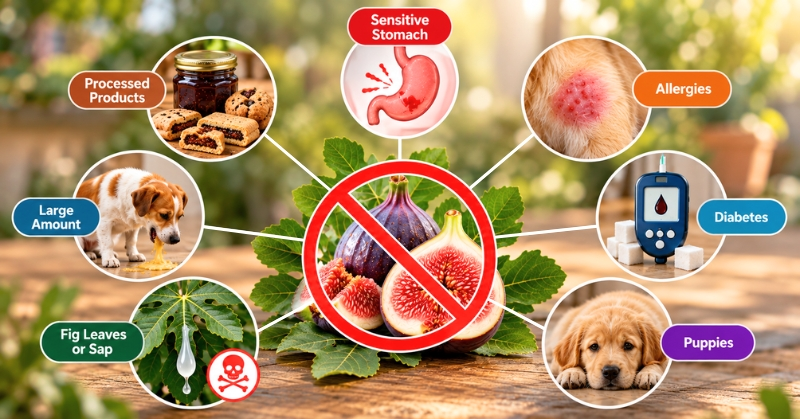
When to Avoid Giving Figs to Dogs?
Here is when you should keep figs away from your dogs:
Sensitive Stomach
- High fiber can cause diarrhea
- Natural sugars may upset digestion
First-Time Feeding (Large Amount)
- Risk of allergic reaction
- Symptoms include itching, vomiting, and irritation
Known Allergies or Dietary Sensitivity
- Can trigger skin issues or inflammation
- Watch for scratching or swelling
Diabetes or Overweight Dogs
- High sugar content
- May spike blood sugar and cause weight gain
Access to Fig Leaves or Sap
- Leaves/sap are toxic
- Can cause vomiting, drooling, and skin irritation
Puppies or Small Dogs
- More sensitive digestion
- Higher risk of stomach upset
Processed Fig Products (Jam, Cookies, Bars)
- They contain added sugars and preservatives
- May include harmful ingredients
Also read: What Human Food Can Dogs Eat? Every Pet Owner Should Know
What Dog Owners Often Ask?
- If your dog ate one small piece of fresh ripe fig flesh, monitor at home, provide access to fresh water, and watch for vomiting, diarrhea, abdominal discomfort, or unusual behavior.
- If your dog ate several figs, monitor more closely for digestive upset, contact your vet if vomiting, diarrhea, abdominal pain, lethargy, or other concerning symptoms develop.
- If your dog ate fig leaves, stems, branches, bark, or sap, contact your vet promptly because plant material can cause irritation and other reactions.
- If the fig contained another potentially toxic ingredient, check the ingredient label and contact a vet or poison service if necessary.
It is best not to give dogs fig jam because most fig jams contain substantial amounts of added sugar, and some products may contain other ingredients that aren’t appropriate for dogs.
Dogs can have small pieces of plain frozen fresh fig, provided the fig is ripe and the stem has been removed. Cut it into appropriately small pieces to reduce choking risk, and avoid large, hard chunks.
It is best not to feed dogs unripe figs because they can contain more irritating latex/sap.
Some figs types have a specialized relationship with tiny fig wasps for pollination, but not all figs require wasps. Common figs can develop without pollination, while certain Smyrna and San Pedro figs depend on fig-wasp pollination. So the popular claim that every edible fig contains a wasp is incorrect.
Yes, some parts of the fig tree/plant (Ficus carica) can be harmful to dogs, especially its leaves, stems, and sap. These parts can cause irritation, drooling, vomiting, or stomach upset if eaten or chewed. However, the ripe edible fruit is generally considered non-toxic in small amounts.
Dogs can eat dates and figs in small amounts, but both should be given occasionally only. Dates must be pitted, and figs should be fresh and limited due to their high sugar and fiber content.
If a dog eats fig leaves or other fig plant material, contact your vet for advice particularly if symptoms such as vomiting, drooling, diarrhea, or mouth and skin irritation develop.
Final Words
Fresh fig flesh can be a safe and nutritious treat for healthy dogs when offered in small amounts. At the same time, they are not necessary for a dog’s diet and are not risk-free when consumed frequently or in larger amounts.
While fresh figs may provide fiber and natural nutrients, their high sugar content and the potential irritation from the fig tree (Ficus carica) make moderation extremely important. For some dogs, especially those with sensitive stomachs, diabetes, or allergies, figs may not be an ideal choice.
Getting a new puppy soon? Try our Dog Name Generator to discover unique, cute, and meaningful name ideas that perfectly match your furry companion.
As a general rule, always introduce any new fruit slowly, serve it in tiny portions, and observe your dog’s reaction. When in doubt, it is better to choose safer fruit alternatives or consult your veterinarian before adding figs to your dog’s diet.