

Many dog owners enjoy adding herbs and seasonings to their own meals, so it is natural to wonder whether they can share those flavors with their canine companions. While some herbs and spices offer nutritional benefits for dogs, others can be toxic, even in small amounts.
The same goes for sauces and condiments. A spoonful of plain pumpkin puree or unsalted bone broth can be a healthy food topper, but barbecue sauce or soy sauce may pose serious health risks.
Understanding “what herbs can dogs eat,” “what spices can dogs eat safely,” and “what condiments can dogs eat” helps you make informed choices when preparing homemade meals or offering an occasional treat.
This guide explains which herbs, spices, sauces, and condiments are safe and which should be avoided.
What Herbs Can Dogs Eat?
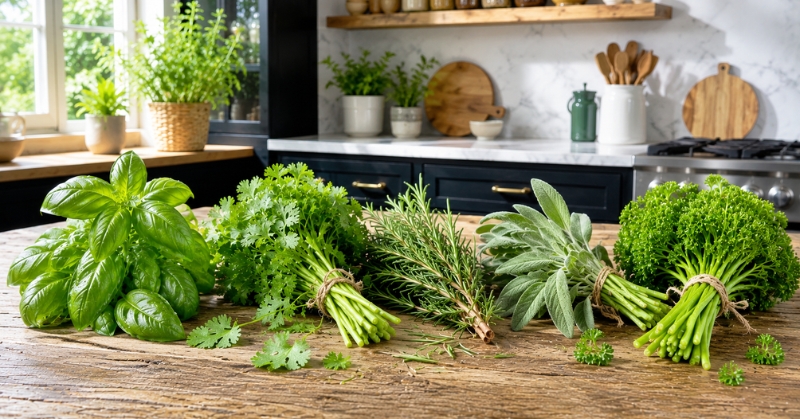
Below are some of the best herbs for dogs that can be included occasionally in homemade meals or used as healthy food toppers.
| Herb | Safe for Dogs? | Fresh or Dried? | Main Benefits | Feeding Notes |
| Basil | Yes | Both | Rich in antioxidants and vitamin K | Serve plain in small amounts |
| Parsley (Curly) | Yes | Both | Freshens breath, vitamins A, C & K | Avoid spring parsley |
| Cilantro | Yes | Fresh | May support digestion | Small amounts only |
| Rosemary | Yes | Both | Antioxidants, brain support | Avoid rosemary essential oil |
| Thyme | Yes | Both | Immune-supporting antioxidants | Plain herb only |
| Sage | Yes | Fresh or dried | Antioxidants | Occasional use |
| Dill | Yes | Both | May aid digestion | Plain only |
| Oregano | Yes | Both | Natural antioxidants | Small culinary amounts |
| Lemon Balm | Yes | Fresh | Mild calming properties | Moderate amounts |
| Marjoram | Yes | Both | Antioxidants | Plain only |
Let’s now briefly talk about some safe herbs for dogs.
Basil
Basil is one of the safest herbs dogs can enjoy. If you have ever wondered, can dogs eat basil leaves or can dogs have fresh basil, the answer is YES.
Fresh basil contains antioxidants, vitamin K, and plant compounds that may help support healthy aging by protecting cells from oxidative stress. It also has a mild flavor that most dogs tolerate well.
Cilantro
Wondering “can a dog eat cilantro,” “can my dog eat cilantro,” or “is cilantro good for dogs?” Yes, cilantro is considered safe for most healthy dogs. It contains antioxidants and may support digestion in some dogs.
The bright flavor of cilantro can also encourage picky eaters to finish their meals. Offer only a small amount of chopped fresh cilantro, as too much may lead to mild digestive upset.
Rosemary
Rosemary is among the most popular dog-safe herbs. Many people ask, “Can dogs eat rosemary?” or “Can dogs have rosemary seasoning?” The answer is YES.
Fresh rosemary contains antioxidants and natural compounds that may support brain health and immune function. It is also commonly used as a natural preservative in premium dog foods.
Sage
Sage is generally safe when used sparingly. If you have asked “can dogs eat sage herb” or “is sage good for dogs,” the answer is a big YES, but in small amounts.
Sage provides antioxidants and has traditionally been used in cooking for centuries. However, large quantities may upset your dog’s stomach, so only use it occasionally as a garnish rather than a primary ingredient.
Parsley
Curly parsley is another herb that is generally safe for dogs. Many owners ask, “Is dried parsley good for dogs?” “Can dogs have parsley flakes?” or “Can dogs eat Italian parsley?”
Curly parsley can help freshen breath and provides vitamins A, C, and K. However, large amounts should be avoided, and spring parsley (a different variety) can be toxic.
Italian parsley may be safe in small culinary amounts, but it is higher in compounds that may cause sensitivity if fed excessively, so moderation is important.
What Herbs Can Dogs Not Eat?
Avoid giving the herbs (listed in the table below) to your dog.
| Herb | Safe? | Why It Is Unsafe? | Possible Symptoms |
| Garlic | No | Damages red blood cells | Weakness, anemia |
| Onion | No | Toxic allium | Vomiting, anemia |
| Chives | No | Toxic allium | Digestive upset, anemia |
| Tea Tree | No | Toxic essential oils | Tremors, weakness |
| Pennyroyal | No | Liver toxin | Liver damage |
| Nutmeg | No | Contains myristicin | Tremors, seizures |
| Cloves | Avoid | Eugenol toxicity | Liver irritation |
Let’s now look at some herbs that are unsafe for dogs.
Garlic
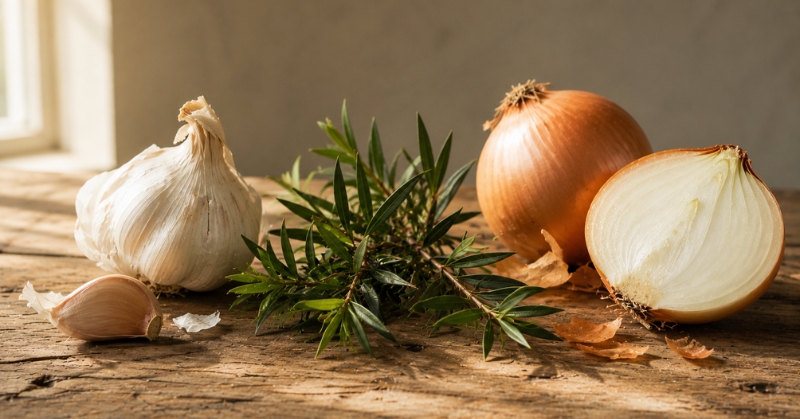
Although garlic is often praised for its health benefits in humans, it is not safe for dogs. Fresh garlic, garlic powder, garlic salt, and dehydrated garlic all contain sulfur compounds that can damage a dog’s red blood cells.
Symptoms of garlic toxicity may not appear immediately but can include weakness, pale gums, loss of appetite, lethargy, and dark-colored urine.
Tea Tree
Never give tea trees to dogs, either orally or as an essential oil. Tea tree oil is highly concentrated and has been linked to poisoning cases involving weakness, drooling, vomiting, tremors, difficulty walking, and low body temperature. Even topical exposure can be dangerous if a dog licks the product from its skin.
Onion
Like garlic, onions and chives belong to the allium family and are toxic to dogs. They may be present in Italian seasoning blends, chicken seasoning, taco seasoning, soup mixes, gravy packets, dry rubs, and frozen meals. Even small amounts consumed repeatedly can increase the risk of anemia.
Read more: Can Dogs Eat Green Onions?
Safe and Unsafe Spices for Dogs
Before explaining safe and unsafe spices, let’s take a quick look at what spices dogs can eat and what they should avoid.
| Spice | Safe? | Health Benefits | Maximum Recommendation |
| Turmeric | Yes | Anti-inflammatory | Small pinch |
| Ginger | Yes | Digestion, nausea | Small pinch |
| Cinnamon | Yes | Antioxidants | Small amounts |
| Cumin | Yes | Digestion | Tiny pinch |
| Fennel Seed | Yes | Digestion | Small amount |
| Coriander | Yes | Antioxidants | Small amount |
| Black Pepper | Avoid | No real benefit | Avoid intentional feeding |
| Chili Powder | No | None | Never |
| Cayenne | No | None | Never |
| Nutmeg | No | None | Never |
What Spices Can Dogs Eat?
Many dog owners also ask, “What spices can dogs eat safely?” “What kind of spices can dogs eat?” or “spices that are good for dogs.”
The good news is that several mild spices can safely add flavor to homemade dog food while providing natural antioxidants and other beneficial compounds.
However, spices should always be used in very small amounts and should never replace a complete, balanced dog diet.
Turmeric
Turmeric is one of the most widely recognized anti-inflammatory spices for dogs. Its active compound, curcumin, has been studied for its antioxidant and anti-inflammatory properties. Some vets may recommend turmeric as part of a broader management plan for dogs with joint discomfort or age-related mobility issues.
A small pinch mixed into food is generally safe for healthy dogs. However, turmeric supplements or high doses should only be used under veterinary guidance, as excessive amounts may cause stomach upset or interact with certain medications.
Cinnamon
Many owners ask whether cinnamon belongs to the spice family that dogs can eat. The answer is YES, but in small amounts. Plain cinnamon is generally non-toxic and contains antioxidants. A light sprinkle of homemade dog treats is usually safe for most healthy dogs.
Avoid allowing your dog to inhale cinnamon powder, as it can irritate the nose and airways. Cinnamon-flavored baked goods are also not automatically safe because they often contain sugar, butter, chocolate, raisins, or xylitol.
Learn more: Can Dogs Eat Cinnamon Rolls?
Ginger
Ginger is another spice that is considered safe for dogs when served in moderation. Fresh or powdered ginger may help support healthy digestion and reduce occasional nausea in dogs.
Some vets even recommend ginger in carefully controlled amounts for dogs that experience motion sickness during travel. However, too much ginger may lead to digestive upset, so only use a small amount.

What Spices Can Dogs Not Eat?
Although several spices are safe, others can irritate your dog’s digestive system or even cause poisoning. If you are wondering “what spices are bad for dogs” or “is spice bad for dogs,” the following spices should stay out of your dog’s bowl.
Cloves
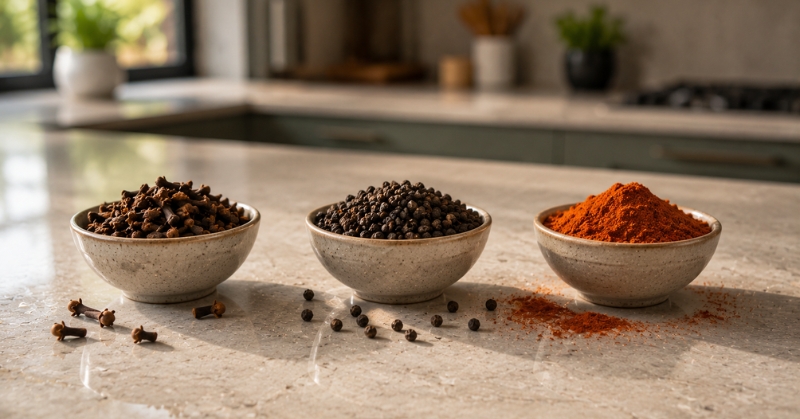
Dog owners often ask, “Can dogs have cloves?” or “Can dogs have ground cloves?” Small accidental amounts used in baked foods are unlikely to cause serious harm, but cloves contain eugenol, which may irritate the digestive tract and can affect the liver in larger quantities. Safer alternatives exist, so it is best to avoid adding cloves to your dog’s food altogether.
Black Pepper
Many owners ask, “Can dogs eat black pepper and salt?” While a tiny accidental amount of black pepper is unlikely to be toxic, it offers no nutritional benefit. Large amounts can irritate the digestive tract and may cause sneezing or coughing if inhaled.
Salt is another concern. Dogs require only a small amount of sodium in their diet, and heavily salted foods or seasoning blends can contribute to dehydration or, in severe cases, salt toxicity.
Chili Powder
Chili powder contains compounds that create intense heat and irritation. Dogs do not benefit from spicy foods, and eating chili powder may lead to stomach pain, vomiting, diarrhea, excessive thirst, and drooling.
Many chili powders also contain garlic powder and onion powder, which makes them even more dangerous.
Learn more: What Household Items are Toxic to Dogs?
A Quick Comparison of Sauces for Dogs
The table below shows safe and unsafe sauces for your dog.
| Sauce | Safe? | Why? | Recommendation |
| Pumpkin Puree | Yes | Fiber | Excellent topper |
| Bone Broth | Yes | Hydration | Low sodium only |
| Chicken Broth | Yes | Flavor | Onion & garlic free |
| Plain Greek Yogurt | Yes | Probiotics | If dairy tolerated |
| Homemade Dog Gravy | Yes | Moisture | Low fat |
| Tahini | Avoid | High fat | Very small amounts |
| Soy Sauce | No | High sodium | Avoid |
| BBQ Sauce | No | Sugar, garlic, onion | Avoid |
| Teriyaki Sauce | No | Soy + garlic | Avoid |
| Hot Sauce | No | Capsaicin | Avoid |
| Tomato Sauce | No | Onion & garlic | Avoid |
| Alfredo Sauce | No | High fat | Avoid |
| Pesto | No | Garlic | Avoid |
What Sauces Can Dogs Eat?
Many dog owners like adding moisture to dry kibble or homemade meals, and wonder, “What sauces can dogs eat?” or “What kind of sauce can dogs eat?”
The good news is that a few plain, minimally processed sauces can make meals more appealing without compromising your dog’s health. You can give the sauces below in moderation.
Tahini
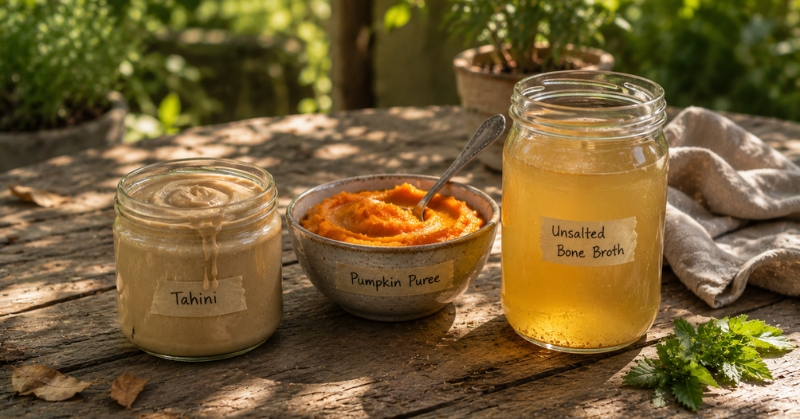
Dogs can eat plain tahini paste in very small amounts because it is made from ground sesame seeds, which are generally non-toxic to dogs.
However, tahini is high in fat and calories, so too much may cause digestive upset or contribute to weight gain. Avoid tahini products mixed with garlic, onion, lemon juice, or excessive salt, as these ingredients can be harmful to dogs.
Plain Pumpkin Puree
Plain canned pumpkin (100% pumpkin with no added sugar or spices) is one of the best dog-safe food toppers.
It is rich in fiber and can help support healthy digestion. Pumpkin also contains vitamins A and C, along with potassium and antioxidants.
Avoid pumpkin pie filling, which typically contains sugar and spices such as nutmeg that are unsafe for dogs.
Learn more: Can Dogs Eat Pumpkin Seeds?
Unsalted Bone Broth
Bone broth is a popular way to encourage picky eaters to finish their meals. Choose a broth that is unsalted, free from onions and garlic, made without artificial flavorings, and low in fat.
A few spoonfuls poured over kibble can add moisture and flavor while helping increase your dog’s water intake.
Read more: Can Dogs Eat Chicken Broth?
What Sauces Can Dogs Not Eat?
Never give the following sauces to your dog.
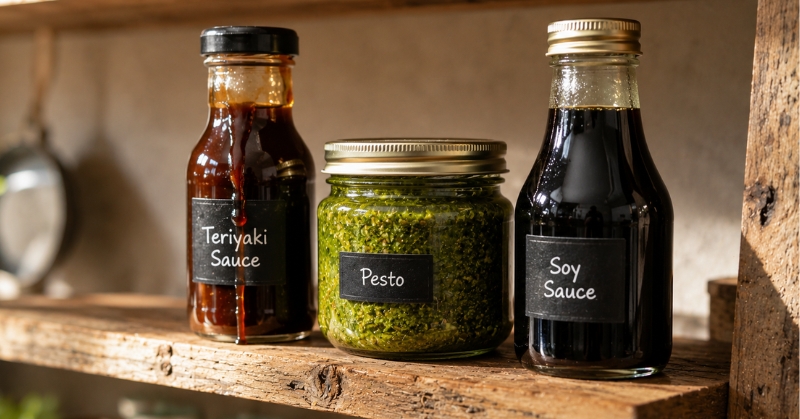
Teriyaki
Dogs should not eat teriyaki sauce. It typically contains soy sauce, sugar, garlic, onion, and high amounts of sodium, all of which can be harmful to dogs.
Excess salt may lead to dehydration or sodium poisoning, while garlic and onion are toxic and can damage red blood cells. If your dog eats a small amount accidentally, monitor for signs of stomach upset and contact your vet if symptoms develop.
Pesto
Dogs should not eat pesto because many traditional recipes contain garlic, which is toxic to dogs. Pesto is also high in fat, salt, and oil, which can upset your dog’s stomach and increase the risk of pancreatitis in sensitive dogs.
Some pesto varieties may even contain nuts or extra seasonings that are unsafe. Choose plain, dog-safe herbs instead of pesto if you want to add flavor to your dog’s food.
Soy Sauce
Soy sauce is extremely high in sodium. Even a small amount can make your dog excessively thirsty, while larger amounts may increase the risk of salt poisoning. Soy sauce also provides no health benefits for dogs, which makes it an easy ingredient to avoid.
A Quick Condiment Comparison
The table below shows which safe condiments for dogs are and which condiments you should avoid giving your canine.
| Condiment | Safe? | Reason | Frequency |
| Applesauce | Yes | Low-fat treat | Occasionally |
| Plain Greek Yogurt | Yes | Probiotics | Occasionally |
| Plain mashed avocado | Yes | Vitamin A, B6, C, E | Occasionally |
| Mustard | No | Irritates stomach | Never |
| Ketchup | No | Sugar & onion | Never |
| Vegemite | No | High sodium | Never |
| Soy Sauce | No | High sodium | Never |
| Mayonnaise | No | High fat | Never |
| Ranch | No | Garlic & fat | Never |
What Condiments Can Dogs Eat?
When it comes to what condiments can dogs eat, the list is much shorter (as given below) than many owners expect.
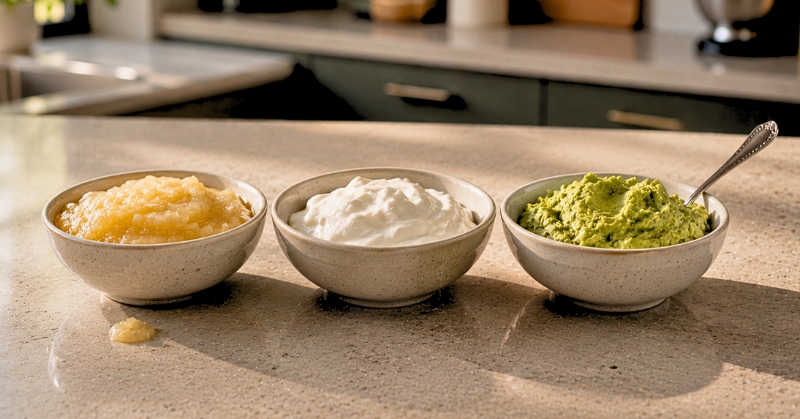
Unsweetened Applesauce
Dogs can eat unsweetened applesauce in moderation. It is a tasty, low-fat treat that provides fiber, vitamin C, and antioxidants. Unsweetened applesauce can be served on its own, frozen into treats, or mixed with your dog’s food. Always choose products with no added sugar, artificial sweeteners, xylitol, or spices.
Plain Greek Yogurt
Dogs can eat plain Greek yogurt in moderation. It is a good source of protein, calcium, and probiotics that may support digestive health.
Choose unsweetened, unflavored yogurt without artificial sweeteners. Since some dogs are lactose intolerant, introduce it gradually and discontinue feeding if it causes digestive upset. Read more about what dairy items and eggs dogs can eat.
Also read: Can Dogs Eat Strawberry Yogurt?
Plain Meshed Avocado
Dogs can eat plain mashed avocado in small amounts. The flesh is generally safe and provides healthy fats, fiber, and vitamins. However, avoid the pit, skin, and leaves, which contain higher levels of persin and can pose choking or intestinal blockage risks. Feed avocado only as an occasional treat.
What Condiments Can Dogs Not Eat?
Many common condiments belong only to human food (as listed below), so never feed them to your dog.
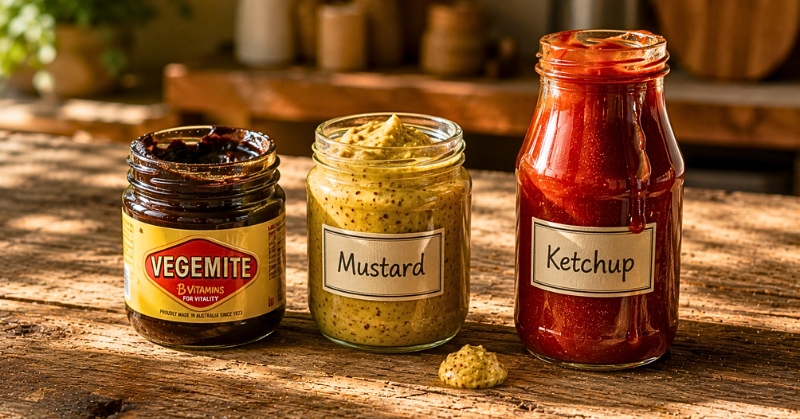
Vegemite
Dogs should not eat Vegemite. Although it is not usually toxic in tiny amounts, Vegemite contains extremely high levels of sodium, which can contribute to dehydration, increased thirst, and, in large quantities, sodium poisoning. Some varieties may also contain added seasonings that are unsuitable for dogs. Choose low-sodium, dog-safe treats instead of Vegemite to avoid unnecessary health risks.
Mustard
Dogs should not eat mustard. Mustard seeds contain compounds that can irritate a dog’s digestive tract, leading to vomiting, diarrhea, and stomach pain.
Prepared mustard also contains vinegar, salt, spices, and sometimes garlic or onion powder, making it even less suitable for dogs. Even a small amount may cause gastrointestinal upset, so it is best to keep all types of mustard away from your pet.
Ketchup
Dogs should not eat ketchup. While a small lick is unlikely to cause serious harm, most commercial ketchup contains high amounts of sugar, salt, and ingredients such as onion powder or garlic powder, which are toxic to dogs.
What Dog Owners Often Ask?
Dogs with pancreatitis should eat a vet-approved, low-fat, highly digestible diet.
You can sprinkle dog-safe herbs, plain pumpkin puree, or a small amount of plain Greek yogurt on your dog’s food.
Parsley, basil, rosemary, thyme, dill, cilantro, and oregano are safe herbs for dogs.
Dogs should not eat garlic, onion, chives, nutmeg, or excessive amounts of black pepper or chili powder.
Plain pumpkin puree, unsweetened applesauce, and low-sodium, onion and garlic-free bone broth are safe sauces.
Only dog-friendly gravy made without onion, garlic, excessive salt, or rich fats is safe for dogs.
Use plain pumpkin puree, unsalted bone broth, or dog-specific food toppers to add moisture and flavor.
No, Sweet Baby Ray’s barbecue sauce is not safe for dogs because it contains high amounts of sugar, sodium, and seasonings that may be harmful.
Plain pumpkin puree, unsweetened applesauce, plain Greek yogurt, and plain tahini are safe for dogs in moderation.
Dogs should avoid ketchup, mustard, barbecue sauce, teriyaki sauce, soy sauce, and other highly seasoned condiments.
Dog-safe seasonings include small amounts of parsley, basil, rosemary, thyme, and turmeric.
Final Words
Choosing the right herbs, spices, sauces, and condiments can make your dog’s meals more enjoyable without compromising their health. Plain culinary herbs like basil, rosemary, and thyme, along with mild spices such as turmeric and ginger, can be safe additions when used sparingly.
In contrast, commercial seasoning blends, spicy foods, and most human sauces and condiments often contain garlic, onions, excess salt, sugar, or other ingredients that are unsafe for dogs.