
Wondering “is there a pregnancy test for dogs?” or “can human pregnancy tests work on dogs?” You are in the right place.
Whether you are a first‑time dog owner, breeder, or caring guardian who just wants clarity, this guide covers everything you need to know about dog pregnancy tests, including how they work, when to do them, what options exist — and what to do after confirming pregnancy.
We will break down the science in simple terms, eliminate owner anxiety with clear explanations, compare testing methods, and guide you on how to interpret and act on results — even if you are nervous about costs, timing, and accuracy.
What Is a Dog Pregnancy Test?
A dog pregnancy test is a diagnostic tool designed to confirm or rule out pregnancy in a female dog (called a bitch). Unlike human pregnancy tests, canine tests look for specific hormones or physical signs related to pregnancy in dogs.
Simply put:
- Human pregnancy tests detect human Chorionic Gonadotropin (hCG) — a hormone dogs don’t produce. Therefore, human pregnancy tests are not effective or reliable for dogs.
- Dog pregnancy tests focus on canine‑specific markers like the hormone relaxin or use imaging (ultrasound, X‑ray) to confirm pregnancy.
So to answer a common query “can a pregnancy test work on a dog?” is only a dog‑specific test can detect because dogs have different reproductive biology than humans.
How Dog Pregnancy Tests Work?
Unlike in humans, pregnancy in dogs is not detectable immediately after mating. Instead, the canine body goes through a series of biological changes before pregnancy can be confirmed.
1. The Relaxin Test — Most Reliable Indicator
The most dependable test for canine pregnancy is the relaxin pregnancy test for dogs, which detects the hormone relaxin — produced by the developing placenta once embryos implant in the uterus.
- When Relaxin Appears? Most dogs start producing measurable levels around day 22-28 after mating or ovulation.
- How It’s Tested? Veterinarians draw a small blood sample and check relaxin levels. The hormone stays elevated throughout pregnancy, making this test reliable once past the early window.
- Accuracy & Limitations: A negative result early in pregnancy might be a false negative — mainly if tested before relaxin levels are high enough to detect. That’s why vets may recommend retesting a week later.
2. At-Home Canine Pregnancy Tests
Recent innovations have introduced at home pregnancy test for dogs that work on a similar principle — they detect relaxin but are designed for owner use. These provide convenience and privacy without a vet visit.
Home pregnancy tests for dogs typically:
- Use a small blood sample or detection strip.
- Return results in minutes.
- Are most accurate when used at least 28 days after ovulation.
For example, some tests on the market report around 96% accuracy when used at the proper time.
AND NOT Urine Tests
Home urine tests like those humans use do not detect relaxin and cannot confirm canine pregnancy. Human kits only look for hCG — a hormone dogs don’t produce.
When Is the Best Time to Do a Dog Pregnancy Test?
Timing is one of the biggest pain points dog owners face when considering pregnancy testing. General rules of thumb are listed in the table below.
| Test Type | Earliest Time After Mating | Most Accurate Timing |
| Relaxin blood test | ~22-25 days | ~28 days post‑mating |
| At‑home dog pregnancy test | ~24-28 days | ~28-35 days |
| Ultrasound | ~25-30 days | ~28-35 days |
| X‑ray | ~42-45 days | ~55+ days (for puppy count) |
Why Not Test Earlier?
Testing too early is one of the most common reasons for false negatives — not because your dog isn’t pregnant, but because the hormones or physical signs simply aren’t detectable yet.
So if you get a negative result before day 28, wait 5-7 days and test again. Most veterinarians and at‑home kits recommend this strategy for accuracy.
Reliable Methods to Confirm Dog Pregnancy
There are several ways veterinarians and dog owners can confirm whether a dog is pregnant. Each method has its own advantages, limitations, and ideal timing, so understanding them helps you choose the right approach for your dog’s situation. Combining multiple methods can also provide extra reassurance.
1. Relaxin Blood Test
The relaxin blood test is considered the gold standard for early pregnancy detection in dogs. Relaxin is a hormone secreted by the placenta shortly after embryo implantation, typically becoming measurable around day 22-28 after mating.
- How it works? A small blood sample is taken from your dog and analyzed for relaxin levels.
- Pros: Highly accurate once past day 25, distinguishes true pregnancy from pseudopregnancy (false pregnancy), and is relatively simple for both dog and owner.
- Cons: Cannot determine the number of puppies, and testing too early may result in a false negative.
Many breeders and veterinarians recommend repeating the test a week later if the first test is negative but pregnancy is still suspected. This ensures accuracy and helps avoid unnecessary stress.
2. Ultrasound
Ultrasound is a non-invasive imaging method that allows visualization of the developing puppies and their heartbeats.
- When it works? Usually detectable 25–30 days after ovulation, but ideal imaging is often around day 28-35.
- Pros: Confirms live pregnancy, allows assessment of embryo development, and can sometimes detect abnormalities early.
- Cons: Requires veterinary expertise and specialized equipment, and early scans may not accurately show the total litter size.
For anxious owners who want reassurance before the halfway point of pregnancy, ultrasound is often the preferred method. It is also valuable if your dog has had reproductive complications in previous pregnancies.
3. X-Ray
X-ray imaging is generally used later in pregnancy, after fetal skeletal structures have calcified, usually 45-55 days post-mating.
- Pros: Excellent for counting puppies and assessing positioning before birth, which helps plan for whelping.
- Cons: Can’t reliably detect early pregnancy, and repeated X-rays should be minimized to reduce radiation exposure.
X-rays are particularly helpful for breeds prone to birthing difficulties, large litters, or previous complications, as it allows the veterinarian to anticipate potential challenges.
4. Abdominal Palpation
Palpation involves gently feeling the dog’s abdomen to detect the presence of developing embryos.
- When it works? Best performed by an experienced veterinarian between 28-35 days of gestation.
- Pros: Non-invasive, inexpensive, and can provide early confirmation without equipment.
- Cons: Accuracy depends heavily on the vet’s experience and the dog’s size; small litters or deep-chested breeds may be harder to assess.
Many breeders use palpation as an initial check before confirming with a relaxin test or ultrasound. While palpation can’t determine exact litter size, it gives early peace of mind.
Combining Methods for Maximum Accuracy
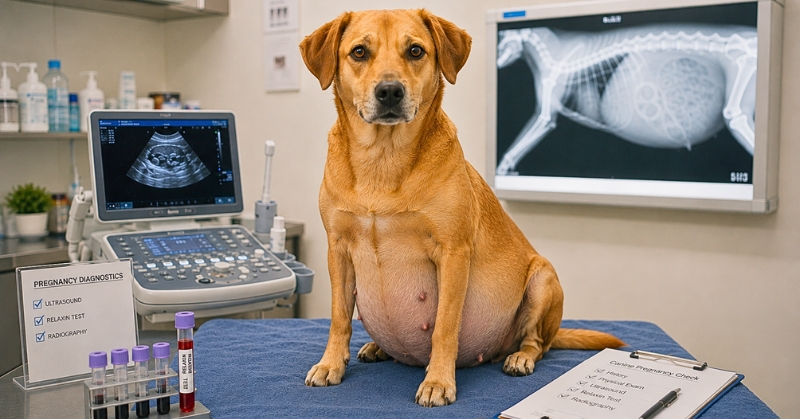
In practice, many owners and breeders use a combination of tests:
- Initial palpation or at-home observation for early signs.
- Relaxin blood test around day 28 for confirmation.
- Ultrasound for developmental assessment.
- X-ray in the last two weeks of pregnancy for accurate litter count.
Using multiple methods ensures that you get both confirmation and valuable information about the health and number of puppies — helping you plan for a safe, stress-free pregnancy and delivery.
How to Check if Your Dog Is Pregnant at Home?
While veterinary tests like the relaxin blood test or ultrasound provide definitive answers, there are several early signs and at-home observations that can help you monitor your dog’s potential pregnancy.
Paying close attention to these subtle changes can give you clues before a formal test is performed, and helps you feel more connected and informed about your dog’s health.
1. Watch for Behavioral Changes
Pregnant dogs often exhibit noticeable shifts in behavior. Some common behavioral signs include:
- Increased Affection or Clinginess: Your dog may seek more attention or prefer to stay close to you.
- Lethargy or Increased Sleep: Early pregnancy can cause fatigue due to hormonal changes.
- Nesting Instincts: Around mid-pregnancy, some dogs may start preparing a quiet, comfortable area — a natural instinct for whelping.
Remember, behavioral changes alone are not conclusive; they should be observed alongside other signs and testing methods.
2. Changes in Appetite
- Early Stages: Some dogs may experience mild nausea or reduced appetite, similar to “morning sickness” in humans.
- Later stages: Appetite may increase as the puppies grow and nutritional demands rise.
Monitoring your dog’s eating habits can help you detect subtle changes that suggest pregnancy.
3. Physical Signs
Certain physical indicators can appear within the first few weeks:
- Nipple Enlargement and Darkening: Often noticeable by week 3-4 of pregnancy.
- Abdominal Changes: Slight swelling may appear later in gestation.
- Weight Gain: Gradual increase is normal as puppies develop.
For small or deep-chested breeds, these changes may be less obvious, making professional testing essential for confirmation.
False Pregnancy Awareness
It is important to know that some dogs experience pseudopregnancy, a hormonal condition where a non-pregnant dog shows many pregnancy-like signs, such as lactation or nesting behavior. This is normal and harmless, but it can be confusing for owners trying to determine pregnancy at home.
Because of this, home observations should ideally be paired with a vet test or at-home canine pregnancy kit for reliable confirmation.
Can Human Pregnancy Tests Work on Dogs?
No. Human pregnancy tests will not work on dogs because they are designed to detect hCG, which dogs do not produce.
Using a human test can give a false negative result even if your dog is very pregnant — delaying necessary care and planning.
So while “can a pregnancy test work on a dog?” is a common question, the answer is clear: only canine‑specific testing methods can confirm pregnancy.
How Much Do Dog Pregnancy Tests Cost?
The cost of dog pregnancy tests ranges between $15 and $300. It mainly depends on whether you use professional veterinary services or at-home kits. At-home blood tests are affordable, costing you somewhere between $15 and $65. In contrast, professional vet services may cost you $50 to $300. Let’s look at a quick breakdown.
Cost of At-Home Pregnancy Test
| Test Type | Cost |
| RLN Kits | $12-$15 per test (they’re often available in bulk) |
| Bellylabs | Approx $65 for one kit |
| Online Kits | Approx $23 |
Cost of Veterinary Pregnancy Test
| Test Type | Cost |
| Blood Test (Relaxin) | $200-$300 (detects after 22-27 days of breeding) |
| Ultrasound | $300-$350 |
| X-Ray | $180-$250 (done around 50+ day, most accurate) |
| Vet Examination | $50-$100 |
Factors Affecting the Cost of Pregnancy Tests
Here is what actually determines the actual cost of tests to determine your dog’s pregnancy.
- Location: Veterinary costs are lower in rural areas compared to metropolitan areas.
- Method: Physical exams and blood tests are cheaper than ultrasounds.
- Vet Fee: The cost of a physical examination is often added to the cost of tests.
Many clinics bundle initial exams with testing, so pricing can be bundled rather than itemized.
What If Your Test Is Positive or Negative?
Let’s explore what to do in case of positive or negative pregnancy test.
Positive Result
- Talk to your vet about the care plan.
- Adjust nutrition and exercise gradually.
- Plan check‑ups to monitor puppy health.
- Start preparing a whelping area ~ 3-4 weeks after confirmed pregnancy.
Negative Result, But Still Suspicious
- Could be too early to test.
- Test again after 5-7 days.
- Consider ultrasound or blood tests at a vet for confirmation.
Real‑world example: Many owners test their dog around day 22, receive a negative, but get positive results when retesting after day 28 because relaxin levels weren’t detectable early on.
Dog Pregnancy Timeline (Quick Overview)
Canine gestation typically lasts about 63 days from conception, but may vary by breed and individual.
| Age of Pregnancy | What Happens |
| Week 1 | Egg fertilizes |
| Weeks 3-4 | Relaxin detection possible |
| Weeks 4-6 | Puppy structure develops |
| ~45+ days | X‑ray can show skeletons |
| ~57-65 days | Whelping (birth) |
What to Do After Confirmation?
Once pregnancy is confirmed:
- Schedule regular vet check‑ups – monitor mother & pups.
- Optimize nutrition – higher‑quality food tailored for pregnant dogs.
- Prepare a whelping area – quiet, clean, comfortable space.
- Stay informed – understand signs of labor and complications.
Need Personalized Help? Try Our Dog Pregnancy Calculator!
Unlike traditional tools, our Dog Pregnancy Calculator not only provide estimated due dates based on breed, size, and mating date, but also acts as your true companion throughout the pregnancy journey.
This tool provides a pregnancy summary and outlines smart questions to ask your vet during the next visit. It also helps you prepare whelping essentials a few weeks before the due date, such as whelping box, safety rails, sterile kit, digital thermometer, and heavy-duty postal scale.
Moreover, it shares key things to monitor during the pregnancy period. Above all, you can generate a complete personalized pregnancy plan/report.
This report provides you with a complete pregnancy overview, including pregnancy age, remaining time, current week, current stage, and estimated due date. Key components of the report include:
- Week-by-week (1-9) pregnancy progress (including signs and key tips)
- Timeline visualization
- Puppy growth chart
Week-by-week signs and tips help you track normal development, spot problems early, provide the right care at the right time, and reduce stress and guesswork.
If you want to track your dog’s age and health needs, use our Dog Age Calculator. The Dog Name Generator helps you find the perfect names for your upcoming litter.
Final Thoughts: How to Get Accurate Results and Peace of Mind?
Testing for pregnancy in dogs is nothing like peeing on a test stick from the drugstore. Because canine reproductive hormones are different from humans, the only reliable pregnancy tests rely on veterinary‑approved science or canine‑specific at‑home kits that detect relaxin.
Whether you choose a vet blood test, an ultrasound, X‑ray, or a modern at‑home dog pregnancy test, understanding the best timing, limitations, and next steps gives you confidence and clarity — and helps ensure the best start for mommy dog and her puppies.
FAQs
Dogs may hint at pregnancy through behavioral changes like increased affection, nesting instincts, mood swings, or physical changes such as enlarged nipples.
The rapid test is an at-home or veterinary test that detects relaxin, a hormone produced during pregnancy, giving results in minutes to a few hours.
At around 3 weeks, signs may include slight nipple enlargement, mild changes in appetite or behavior, and occasional lethargy, but many dogs show no obvious symptoms yet.
Breeds with large heads and small pelvic openings, like Bulldogs, Boston Terriers, or Chihuahuas, are prone to complications and often require veterinary monitoring during birth.
Yes, there are at-home dog pregnancy tests that detect relaxin via a small blood sample, but they are different from human urine tests and are most accurate after 28 days post-mating.
Dogs with strong hormonal cycles, such as Toy breeds, Dachshunds, and some Terriers, may experience pseudopregnancy, showing pregnancy-like signs without actually being pregnant.
Vets confirm pregnancy through relaxin blood tests, ultrasound imaging, abdominal palpation, or X-rays (later in gestation), depending on timing and the dog’s condition.
Currently, reliable at-home tests require a small blood sample to detect relaxin. Urine or human pregnancy tests do not work on dogs.
Pregnancy can generally be confirmed around 25-28 days post-mating with a relaxin test or ultrasound. X-rays for counting puppies are usually done after 45 days.