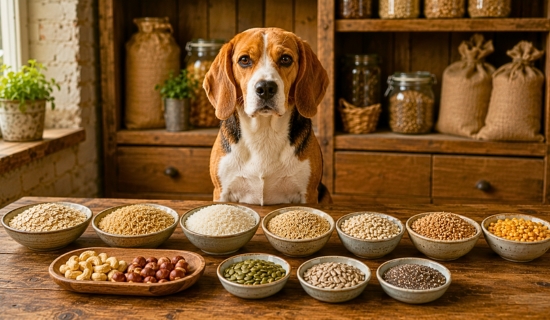
As a dog owner, you have probably wondered whether it is safe to share foods like oatmeal, rice, pumpkin seeds, peanuts, or even sesame seeds with your furry companion. The answer is not as straightforward as a simple yes or no.
Some grains, nuts, and seeds provide valuable nutrients that support your dog’s health, while others can cause digestive upset, choking hazards, or even life-threatening poisoning.
Despite the popularity of grain-free diets, most healthy dogs can digest properly cooked grains without any issues. Likewise, certain seeds offer healthy fats, fiber, vitamins, and minerals that complement a balanced diet.
However, nuts require extra caution because many are high in fat, and some varieties are toxic to dogs. Understanding the differences between safe and unsafe foods helps you make better dietary choices for your pet.
Whether you are looking for healthy treats, searching for alternatives for a dog with grain sensitivities, or simply curious about what belongs in your dog’s bowl, this guide covers every aspect of this subject.
What Type of Grains Can Dogs Eat?
Many dog owners ask, what kind of grain can a dog eat without causing digestive problems? Fortunately, several grains are not only safe but also nutritious when cooked properly and served in moderation.
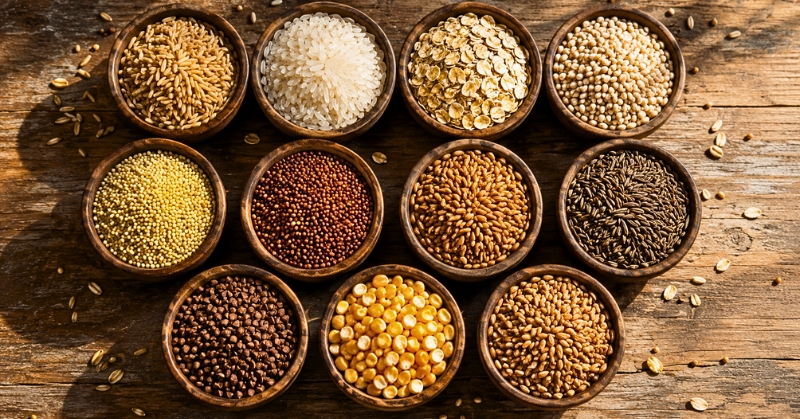
If you are wondering what type of grains can dogs eat or what whole grains can dogs eat, the following options are among the best choices.
| Grain | Safe? | Key Benefits | Best Way to Serve |
| Brown rice | Yes | Fiber, manganese, B vitamins | Plain and cooked |
| White rice | Yes | Easy to digest, gentle on upset stomachs | Plain and cooked |
| Oatmeal | Yes | Soluble fiber, iron, antioxidants | Cooked without sugar or flavorings |
| Quinoa | Yes | Complete protein, magnesium, fiber | Fully cooked |
| Barley | Yes | Fiber, selenium, vitamins | Cooked thoroughly |
| Millet | Yes | Gluten-free, magnesium, phosphorus | Cooked |
| Sorghum | Yes | Antioxidants, fiber, protein | Cooked |
| Whole wheat | Usually | Fiber and nutrients for dogs without wheat allergies | Cooked or baked into dog treats |
| Rye | Yes | Fiber and B vitamins | Cooked in moderation |
| Buckwheat | Yes | Naturally gluten-free, rich in antioxidants | Cooked |
| Corn | Yes | Energy, vitamins, antioxidants | Cooked kernels without butter or salt |
| Bulgur | Yes | Fiber and minerals | Fully cooked |
| Farro | Yes | Protein, iron, magnesium | Cooked |
| Amaranth | Yes | Calcium, iron, protein | Cooked |
No single grain provides all the nutrients your dog needs. Offering a variety of dog-safe grains to your canine helps create a more balanced diet while supplying healthy carbohydrates, vitamins, minerals, and fiber.
Brown Rice
Brown rice is a nutritious grain for dogs because it retains its bran and germ, providing more fiber and certain nutrients than white rice. It supplies energy, magnesium, manganese, and B vitamins, but its higher fiber content can make it harder for some dogs to digest.
White Rice
White rice is easier to digest than brown rice because much of its fiber has been removed during processing. Many vets prefer plain cooked white rice for dogs experiencing temporary digestive upset because it is gentle on the stomach and easy to absorb.
Read more: Can Dogs Eat Wild Rice?
Oatmeal
Oatmeal is an excellent whole grain that’s naturally rich in soluble fiber, which supports digestive health and may help regulate cholesterol and blood sugar levels. It is also a good source of iron, zinc, vitamin B1, and antioxidants.
Barley
Barley provides an excellent combination of soluble fiber and essential minerals. Its benefits include better digestive health, improved gut bacteria, slow-release carbohydrates, selenium, and copper. Cook barley thoroughly before feeding it to your dog.
Millet
Millet is a naturally gluten-free grain that’s easy to digest and packed with minerals like magnesium and phosphorus. It can be especially useful for dogs that don’t tolerate wheat well. Plain cooked millet mixes well with lean meats and vegetables.
Sorghum
Sorghum is becoming increasingly popular in premium dog foods due to its nutritional profile. It supplies dietary fiber, plant protein, antioxidants, and iron. Its slow digestion also helps provide sustained energy throughout the day.
Whole Wheat
Whole wheat is safe for most dogs unless they have a diagnosed wheat allergy or intolerance. Compared to refined wheat flour, whole wheat contains more fiber, more vitamins, and more minerals. Many homemade dog biscuits successfully use whole wheat flour.
Rye
Rye contains valuable fiber and B vitamins while offering a unique flavor profile. Dogs can eat cooked rye in moderation, although it should not replace more commonly used grains like rice or oats.
Buckwheat
Buckwheat is another pseudocereal that’s naturally gluten-free. Despite its name, it is unrelated to wheat. This makes it suitable for dogs that cannot tolerate wheat-based products. Its antioxidants and minerals make it a nutritious occasional grain alternative.
Corn
Corn often receives criticism, but plain cooked corn is perfectly safe for most dogs. It contains carbohydrates, vitamin C, vitamin B, lutein, and beta-carotene. However, dogs should never chew on corn cobs because they can cause dangerous intestinal blockages.
Farro
Farro is an ancient whole grain that’s rich in protein, iron, magnesium, and dietary fiber. Its chewy texture softens considerably after cooking, which makes it easier for dogs to digest. Read more about feeding farro to dogs.
What Human Food Can a Dog with Grain Allergies Eat?
Many pet owners worry that grains are a common cause of food allergies in dogs. In reality, true grain allergies are relatively uncommon. Most food allergies in dogs are triggered by animal proteins such as beef, chicken, dairy, or eggs rather than grains.
If you are wondering what human food can a dog with grain allergies eat, there are plenty of safe, nutritious options to consider.
Lean Animal Proteins
Protein should remain the foundation of your dog’s diet. Most dogs with grain allergies can safely eat lean, unseasoned meats, provided they are not allergic to the specific protein. Good choices include cooked chicken (if tolerated), turkey, lean beef, lamb, pork, salmon, white fish, and eggs (unless allergic).
Vegetables
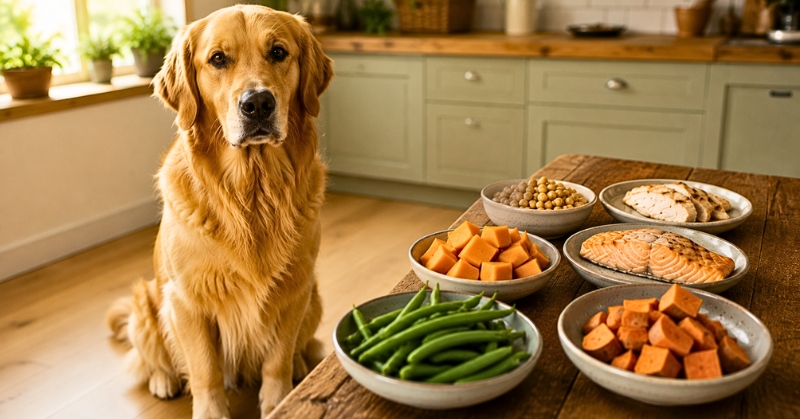
Many vegetables provide fiber, vitamins, and antioxidants without containing grains. Safe options include pumpkin, sweet potatoes, carrots, green beans, broccoli, zucchini, cucumbers, spinach (in moderation), and peas. Cook harder vegetables until tender, or serve them plain without butter or seasonings.
Fruits
Fresh fruits can make healthy, low-fat treats for dogs. Suitable fruits include apples (without seeds), blueberries, strawberries, bananas, watermelon (seedless), pears (without seeds), and mango (without the pit). Fruits contain natural sugars, so they should be fed in moderation.
Legumes
Some grain-free diets include legumes as alternative carbohydrate sources. Dogs can often eat lentils, chickpeas, green peas, black beans, and kidney beans (fully cooked). Introduce legumes gradually, as excessive amounts may cause gas or digestive discomfort in some dogs.
Grain-Free Carbohydrate Sources
If your dog cannot eat certain grains, you can replace them with other carbohydrate-rich foods such as sweet potatoes, white potatoes (plain and cooked), pumpkin, and butternut squash. These foods provide energy along with beneficial vitamins and fiber.
What Nuts Can Dogs Eat Safely?
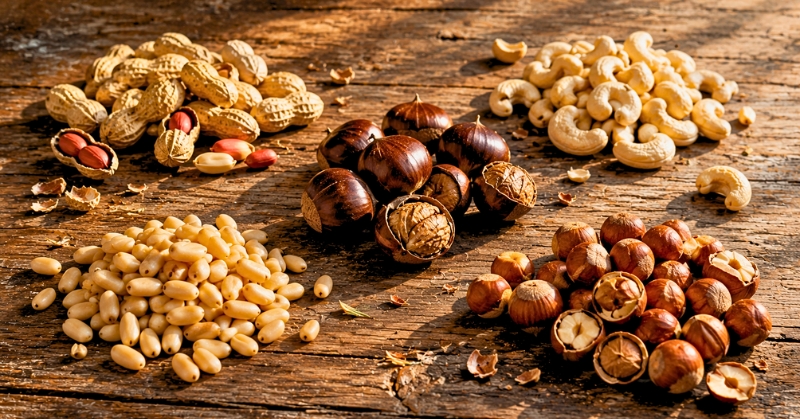
Before getting into the details, let’s take a quick look at the following table that answers what nuts can dogs eat safely and what type of nuts can dogs eat.
| Nut | Safe for Dogs? | Benefits | Feeding Tips |
| Peanuts | Yes | Protein, healthy fats, vitamin E | Plain, unsalted, shelled |
| Cashews | Occasionally | Magnesium, copper, protein | Small amounts only |
| Chestnuts | Yes (edible chestnuts only) | Fiber, vitamin C, potassium | Cooked or roasted without seasoning; avoid toxic horse chestnuts |
| Pine Nuts | Occasionally | Healthy fats, antioxidants | Very small portions |
| Hazelnuts | Limited | Vitamin E, healthy fats | Choking risk for small dogs |
| Almonds | Not recommended | Difficult to digest | May cause stomach upset |
| Pistachios | Avoid | High fat | Risk of pancreatitis and mold |
| Walnuts | Avoid | High fat | Mold toxins may cause poisoning |
| Pecans | Avoid | High fat | Can contain toxic molds |
| Brazil Nuts | Avoid | Extremely high fat | Digestive upset and pancreatitis risk |
| Macadamia Nuts | Toxic | None | Never feed |
Let’s take a closer look at the safest options.
Peanuts
Peanuts are technically legumes rather than true nuts, which makes them one of the safest nuts for dogs. When fed plain and unsalted, peanuts provide plant protein, healthy fats, vitamin E, niacin, and magnesium. Always remove the shell before feeding, and avoid honey-roasted, salted, chocolate-covered, or flavored peanuts.
Cashews
Cashews are another nut that healthy dogs can enjoy occasionally. They contain magnesium, copper, zinc, protein, and healthy fats. However, because cashews are calorie-dense and high in fat, they should only be given in small quantities. Too many cashews may contribute to weight gain or digestive upset. Choose plain, unsalted cashews without seasonings.
Chestnuts
Unlike many other nuts, chestnuts are relatively low in fat and high in fiber. It makes them one of the better options for dogs. They also provide vitamin C, potassium, and manganese. Cook or roast chestnuts without salt, butter, sugar, or spices before offering small pieces to your dog.
Only offer edible chestnuts. Horse chestnuts, also called conkers or buckeyes, are toxic to dogs.
Pine Nuts
Pine nuts aren’t toxic to dogs, but they are rich in fat. A few plain pine nuts are unlikely to cause problems for a healthy adult dog. However, larger quantities may lead to vomiting, diarrhea, or pancreatitis, especially in dogs prone to digestive issues. Pine nuts are small and calorie-dense, so they are best reserved for occasional treats.
Hazelnuts
Hazelnuts are not toxic, but they are not an ideal snack. The main concern is their size and shape, which can create a choking hazard, particularly for puppies and small breeds. They are also high in fat, so frequent feeding isn’t recommended.
What Nuts Can Dogs Not Eat?
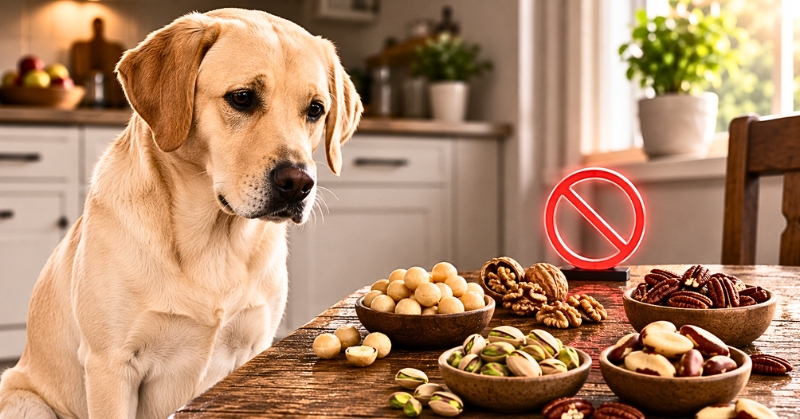
Knowing what nuts can dogs not eat is just as important as knowing which ones are safe. Several nuts can cause serious health problems due to their fat content, mold contamination, or naturally occurring toxins. The following nuts should generally be avoided.
Macadamia Nuts
Macadamia nuts are among the most dangerous nuts for dogs. Even a small amount can cause poisoning, although the exact toxin responsible remains unknown. Symptoms usually appear within 12 hours and may include weakness, tremors, difficulty walking, vomiting, and fever. If your dog eats macadamia nuts, contact your vet immediately.
Walnuts
Fresh walnuts aren’t inherently toxic, but they are not recommended for dogs. The biggest concern is mold. Moldy walnuts can contain tremorgenic mycotoxins, which may cause severe neurological symptoms, including tremors, seizures, high body temperature, and muscle weakness. Walnuts are also high in fat, which increases the risk of pancreatitis.
Pecans
Like walnuts, pecans are susceptible to mold contamination and are very high in fat. Eating pecans may lead to vomiting, diarrhea, abdominal pain, and pancreatitis. Pecans should never be offered intentionally, as safer alternatives (such as plain, unsalted cashews or peanuts) are available.
Pistachios
Pistachios contain excessive fat and may also harbor mold that produces harmful toxins. Frequent consumption increases the risk of digestive upset, pancreatitis, and weight gain. Salted pistachios are even more problematic because excess sodium can be harmful to dogs.
Brazil Nuts
Brazil nuts are among the fattiest nuts available. Even one or two can contain a significant amount of fat for a dog. It increases the likelihood of gastrointestinal upset or pancreatitis. Brazil nuts offer little nutritional advantage over safer options, so it is better to avoid them.
Mixed Nuts and Flavored Nuts
Never feed dogs mixed nuts intended for humans. These products often contain ingredients that are unsafe, including salt, garlic powder, onion powder, chili seasoning, chocolate, artificial sweeteners, and raisins. Even if the nuts themselves are safe, these added ingredients can make the snack dangerous.
What Kind of Seeds Can Dogs Eat?
Seeds may be small, but many of them are packed with nutrients that can benefit your dog’s overall health. Seeds can provide fiber, vitamins, minerals, and beneficial fatty acids, but their nutritional content varies by type. Many seeds are also high in fat and calories, so they should be offered in small amounts.
If you are wondering what kind of seeds can dogs eat, the good news is that several edible seeds are safe when served plain and in moderation. The table below highlights some of the most common seeds dogs can and cannot eat.
| Seed | Safe for Dogs? | Nutritional Benefits | Serving Tips |
| Pumpkin Seeds | Yes | Protein, magnesium, zinc, antioxidants | Plain, roasted or cooked, unsalted |
| Sunflower Seeds | Yes | Vitamin E, selenium, healthy fats | Shelled, unsalted |
| Chia Seeds | Yes | Omega-3 fatty acids, fiber, calcium | Soaked or mixed into food |
| Flaxseeds | Yes | Omega-3 fatty acids, fiber, lignans | Ground for easier digestion |
| Hemp Seeds | Yes | Complete protein, omega-3 and omega-6 fats | Plain and shelled |
| Sesame Seeds | Yes (in moderation) | Calcium, copper, healthy fats | Plain, unsalted |
| Watermelon Seeds | Occasionally | Magnesium, iron, healthy fats | Shelled and unsalted |
| Squash Seeds | Yes | Zinc, antioxidants, healthy fats | Plain and roasted |
| Cucumber Seeds | Yes | Fiber and hydration | Fresh, in small amounts |
| Poppy Seeds | No | May contain toxic alkaloids | Avoid completely |
| Apple Seeds | No | Contain cyanogenic compounds | Remove before feeding apples |
| Cherry Pits | No | Choking hazard and toxic compounds | Never feed |
Let’s take a closer look at the safest seed options.
Pumpkin Seeds
Pumpkin seeds are among the healthiest seeds you can offer your dog. They contain a wide range of nutrients that support immune function, skin health, and overall wellness. Pumpkin seeds provide protein, magnesium, zinc, iron, healthy fats, and antioxidants.
Sunflower Seeds
Sunflower seeds can be a healthy occasional treat when served correctly. They are an excellent source of vitamin E, selenium, healthy fats, copper, and vitamin B6. Vitamin E acts as a powerful antioxidant that supports healthy skin, a shiny coat, and immune function.
Flaxseeds
Flaxseeds are one of the best plant-based sources of omega-3 fatty acids. Their benefits include healthier skin, shinier coat, digestive support, antioxidant protection, and additional fiber. Ground flaxseed is generally preferable to whole flaxseed because dogs digest it more easily and absorb more of its nutrients.
Hemp Seeds
Hemp seeds are safe for dogs and offer an impressive nutritional profile. They contain complete protein, omega-3 fatty acids, omega-6 fatty acids, vitamin E, magnesium, and iron. Unlike marijuana, hemp seeds contain only trace amounts of THC and do not produce psychoactive effects.
Watermelon Seeds
Small amounts of shelled watermelon seeds are generally safe for dogs. They provide magnesium, iron, healthy fats, and protein. However, eating large numbers of seeds may increase the risk of digestive upset or intestinal blockage, particularly in smaller dogs.
Squash Seeds
Squash seeds share many nutritional similarities with pumpkin seeds. They offer zinc, magnesium, healthy fats, and antioxidants. Serve squash seeds plain and unsalted after roasting or cooking them. Avoid seeds seasoned with garlic, onion powder, or excessive salt.
Cucumber Seeds
Cucumber seeds are soft, easy to digest, and safe for most healthy dogs. Although they aren’t especially nutrient-dense, they contribute small amounts of fiber and moisture. Dogs eating fresh cucumber slices will usually consume the seeds naturally without any problems.
Can Dogs Eat Sesame Seeds?
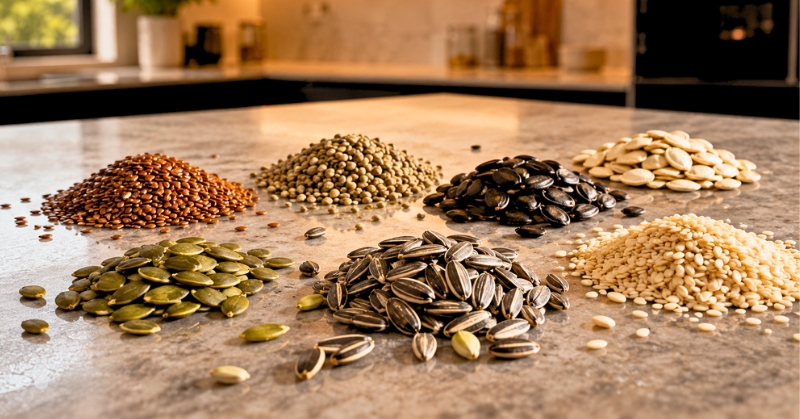
One of the most frequently asked questions is: Can dogs eat sesame seeds? The answer is yes, dogs can eat sesame seeds in moderation. These seeds are not toxic to dogs and contain several beneficial nutrients, including healthy unsaturated fats, calcium, copper, iron, magnesium, plant protein, and dietary fiber.
Learn more: Can Dogs Eat Chia Seeds?
What Can Happen If a Dog Eats Bird Seed?
Many dog owners become concerned after catching their pet eating spilled bird seed in the backyard or beneath a bird feeder. So, what can happen if a dog eats bird seed?
In most cases, a small amount of plain bird seed is unlikely to cause serious harm. Many commercial bird seed mixes contain ingredients such as millet, cracked corn, sunflower seeds, safflower seeds, and Milo (sorghum). These ingredients are generally not toxic to dogs.
However, old or damp bird seed may develop harmful mold toxins. Eating large amounts can cause digestive upset or intestinal blockage, and some mixes contain raisins, which are toxic to dogs. Seed found under feeders may also be contaminated with bird droppings. Contact your veterinarian if your dog eats moldy seed or a large amount.
What Dog Owners Often Ask?
Plain cooked white rice and oatmeal are among the easiest grains for dogs to digest. Brown rice, barley, and quinoa are also nutritious options when introduced gradually.
Yes, fully cooked quinoa is safe for most healthy dogs and provides protein, fiber, and essential minerals.
Yes, ground flaxseed is an excellent source of omega-3 fatty acids and dietary fiber. Feed it in small amounts to avoid digestive upset.
Yes, chia seeds are safe in moderation and provide omega-3 fatty acids, calcium, fiber, and antioxidants.
Yes, plain, unsalted peanuts are generally safe in moderation. Avoid salted, flavored, chocolate-covered peanuts and peanut butter containing xylitol.
No, almonds are not considered toxic, but they are difficult for dogs to digest and may cause stomach upset or intestinal blockage, especially in small dogs.
Macadamia nuts are the most well-known poisonous nuts for dogs. Moldy walnuts can also be extremely dangerous because they may contain toxic fungal compounds.
It is best to avoid mixed nuts. They often contain unsafe varieties, excessive salt, chocolate, raisins, spices, or other ingredients that can be harmful to dogs.
Yes, plain, shelled sunflower seeds found in many bird seed mixes are generally safe, but they should be unsalted and fed only in small quantities.
Senior dogs may benefit from grains such as oatmeal, brown rice, barley, and quinoa, which provide fiber, vitamins, and carbohydrates. The best choices depend on your dog’s health and dietary needs, so consult your veterinarian if dietary changes are needed.
Yes, plain cooked oatmeal can be part of a healthy diet for many dogs. However, it should be fed in moderation and should not replace a complete and balanced dog food.
Yes, most puppies can safely eat properly cooked grains unless a vet has diagnosed a specific allergy or intolerance. Puppies require balanced nutrition to support healthy growth, so grains should complement (not replace) a high-quality puppy diet.
Not necessarily. Grain-free diets are not inherently healthier than diets containing grains. Most dogs tolerate wholesome grains, and a grain-free diet should be chosen based on your dog’s individual needs in consultation with a veterinarian. The FDA has investigated reports of dilated cardiomyopathy (DCM), a serious heart disease, in dogs eating certain diets, many of them grain-free and high in peas or lentils. The cause remains unknown, and cases have also involved grain-containing diets.
Summing Up
Grains, nuts, and seeds can all contribute to a healthy canine diet when you choose the right foods and serve them responsibly. Most dogs thrive on wholesome grains such as brown rice, oatmeal, barley, and quinoa, while nutritious seeds like pumpkin, chia, flaxseed, and sunflower seeds can provide valuable fiber, healthy fats, vitamins, and minerals.
By understanding what grains, nuts, and seeds dogs can eat, you can confidently offer safe, nutritious treats that support your dog’s overall health while avoiding foods that could put their well-being at risk.